
Table of Contents
Introduction: LG vs. Samsung Refrigerator 2026
You’re standing in the appliance aisle or scrolling at midnight, trying to figure out whether to go with LG or Samsung. Both look incredible. Both promise everything. And both cost serious money.
So which one is actually worth it for a family in 2026?
That’s exactly what this guide is here to answer. No fluff, no brand bias, just a real, honest breakdown of how LG and Samsung refrigerators compare on the things that actually matter day to day: storage, cooling, energy bills, smart features, and how long they’ll last before something breaks.
Whether you’re feeding a household of six or just need something reliable that doesn’t drive up your electricity bill, this comparison will help you make a confident choice. Let’s dig in.
👉 [Read More: Best refrigerators for large families]
Key Differences at a Glance
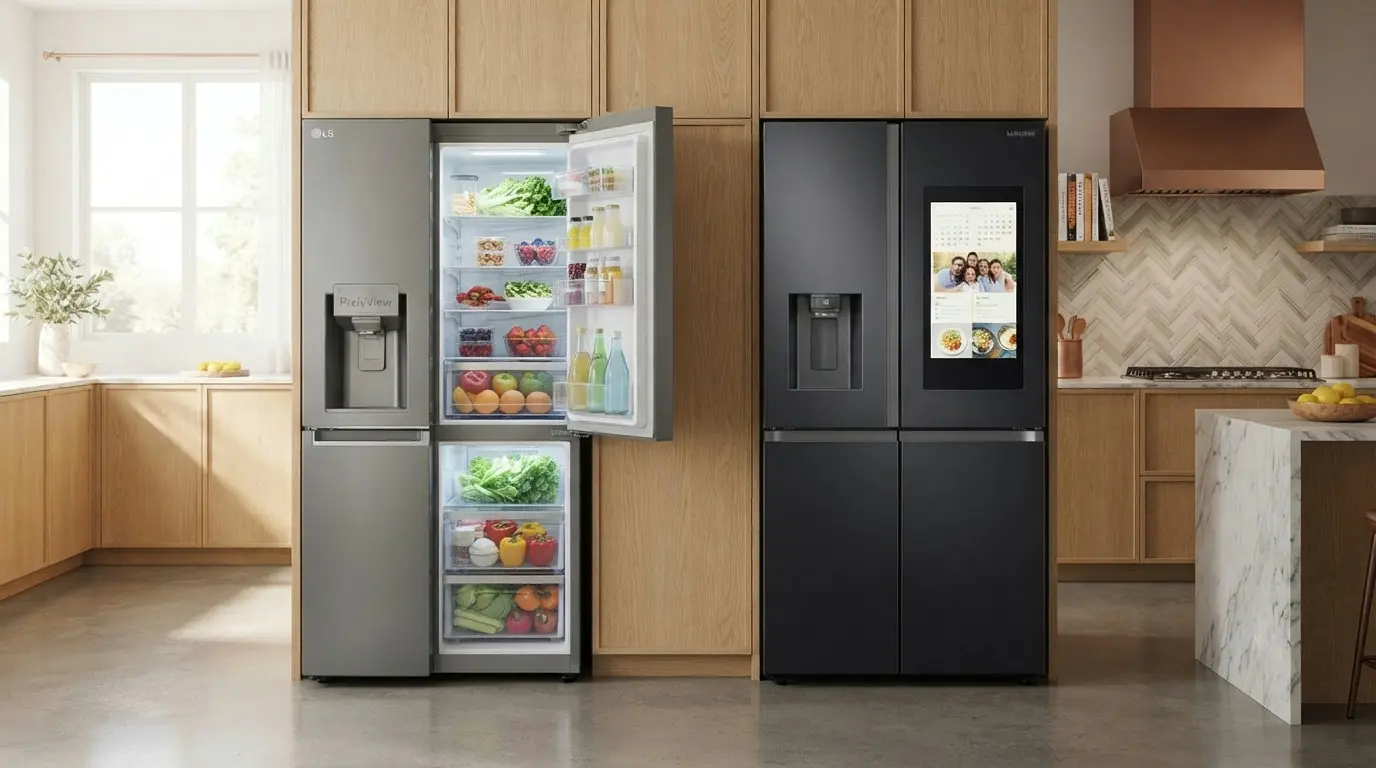
Both LG and Samsung are global leaders in refrigerator technology, but they have very different personalities.
LG is built around reliability. Their focus is on quiet operation, inverter compressor technology, and long-term performance. LG refrigerators tend to be the go-to choice for families who want something dependable that just works, year after year.
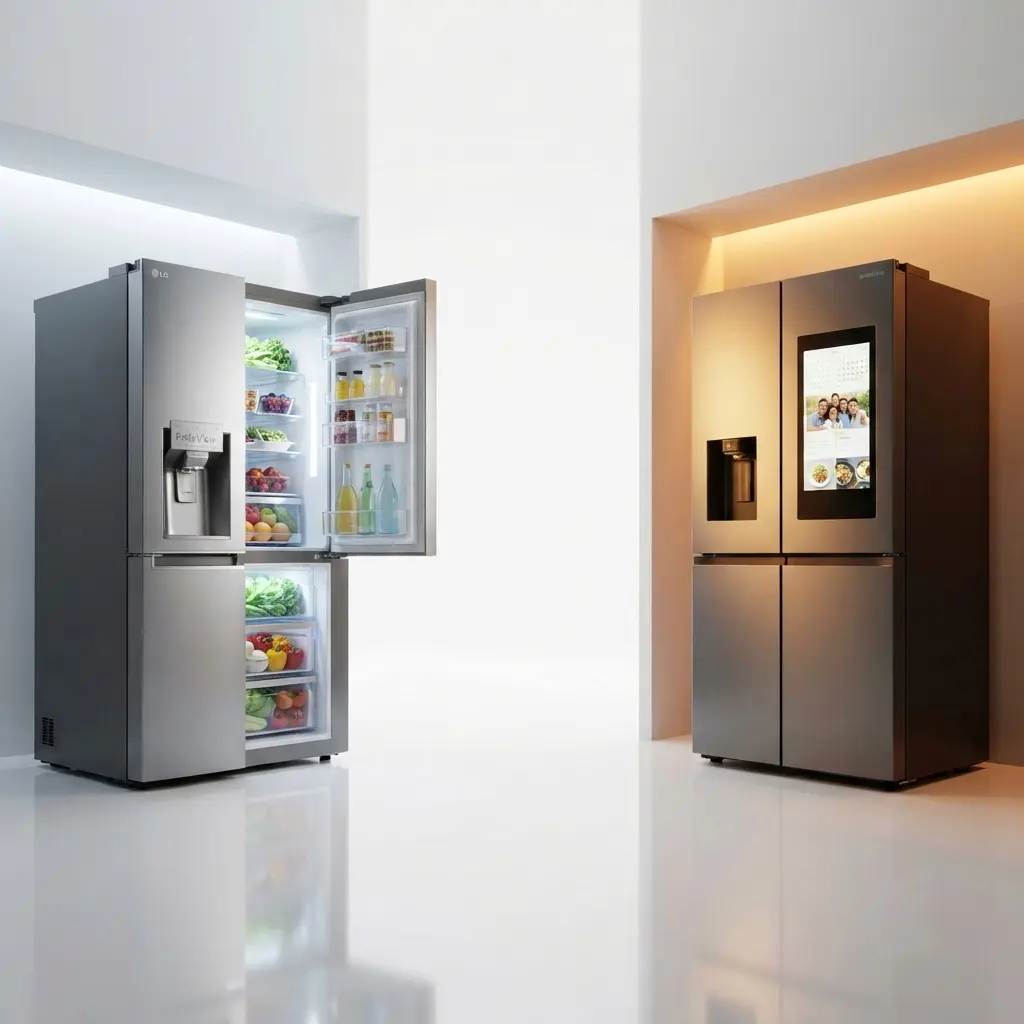
Samsung leans into innovation and style. Their refrigerators often feature bold designs, flexible compartments, and cutting-edge smart home integration. If you love gadgets and want your fridge to feel like part of a connected home, Samsung speaks your language.
Neither brand is “bad.” The right choice depends entirely on what your family actually needs.
Design and Storage Capacity
When you’ve got kids, leftovers, meal preps, and a week’s worth of groceries to store, space and organization matter more than most people expect.
LG’s Approach to Design:
- LG’s signature Door-in-Door feature gives quick access to frequently used items without opening the full fridge, great for kids grabbing snacks without letting all the cold air out.
- Their French Door and Side-by-Side models offer generous interior space, often ranging from 28 to 30 cubic feet in full-size models.
- Adjustable shelving and wide drawer bins make it easy to fit awkward-sized items like pizza boxes or large platters.
Samsung’s Approach to Design:
- Samsung’s FlexZone drawer lets you switch between fridge and freezer modes, giving you on-demand flexibility for beverages, deli meats, or party foods.
- Their Bespoke line offers customizable panel colors, a nice touch if your kitchen aesthetic matters to you.
- Samsung’s interior layout tends to feel more modern and sleek, though some users find the compartments less intuitive to organize.
Bottom line on design: LG wins for practical, family-focused storage. Samsung wins for flexibility and visual style.
Cooling Technology and Performance
A fridge that can’t keep food fresh consistently is a fridge that costs you money at the grocery store. Both brands have strong cooling technology, but they approach it differently.
LG’s Cooling System:
LG uses a Linear Inverter Compressor, a single, smooth-running motor that adjusts its speed rather than stopping and starting constantly. This means:
- Less noise (ideal for open-plan kitchens)
- More stable temperatures throughout the fridge
- Lower wear and tear over time
Samsung’s Cooling System:
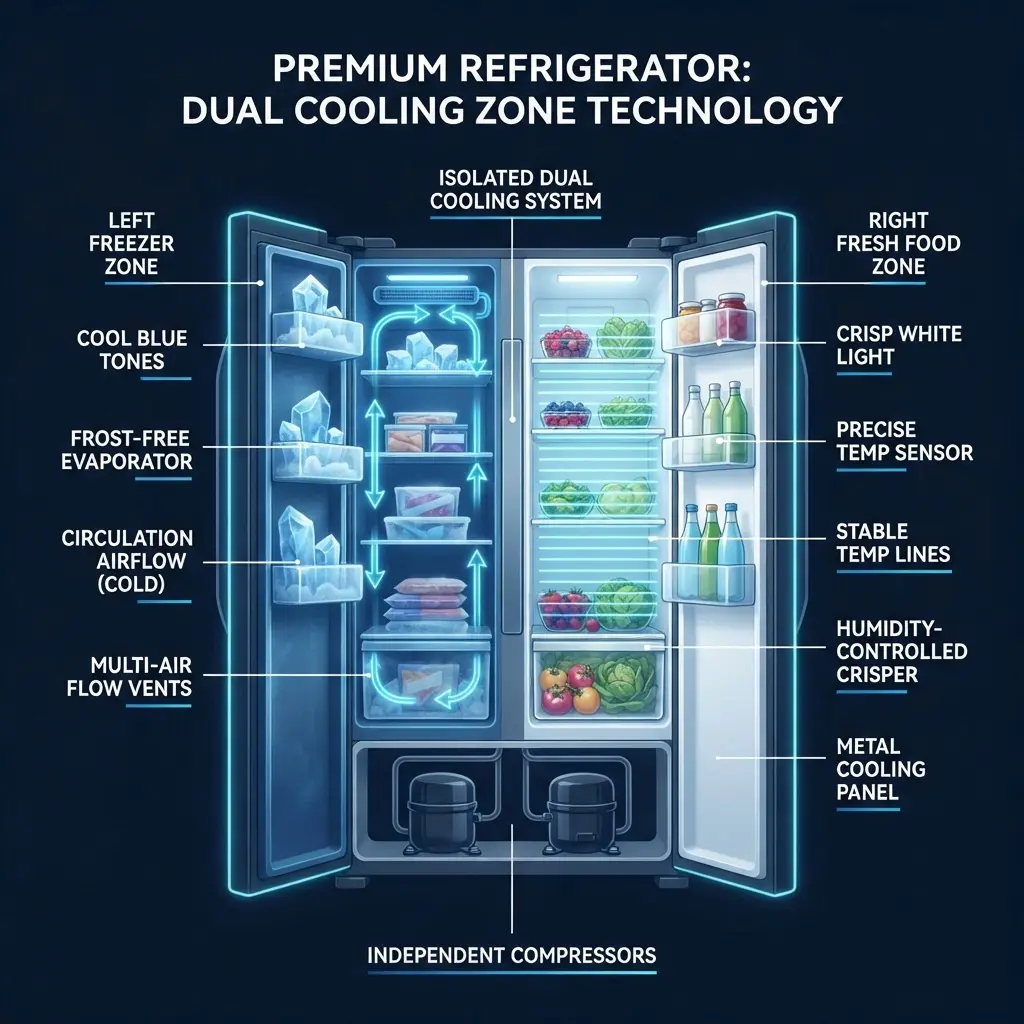
Samsung’s Twin Cooling Plus technology uses two separate evaporators, one for the fridge, one for the freezer. This keeps the air in each compartment completely separate, which means:
- Freezer odors don’t transfer to fresh food
- Humidity levels stay better controlled
- Ice cream and frozen items stay firmer and drier
Performance verdict: LG is quieter and more consistent. Samsung is better at keeping different food types fresh without cross-contamination. Both are excellent, it comes down to your priorities.
Energy Efficiency
With energy costs rising globally, this is one section families can’t afford to skip.
LG:
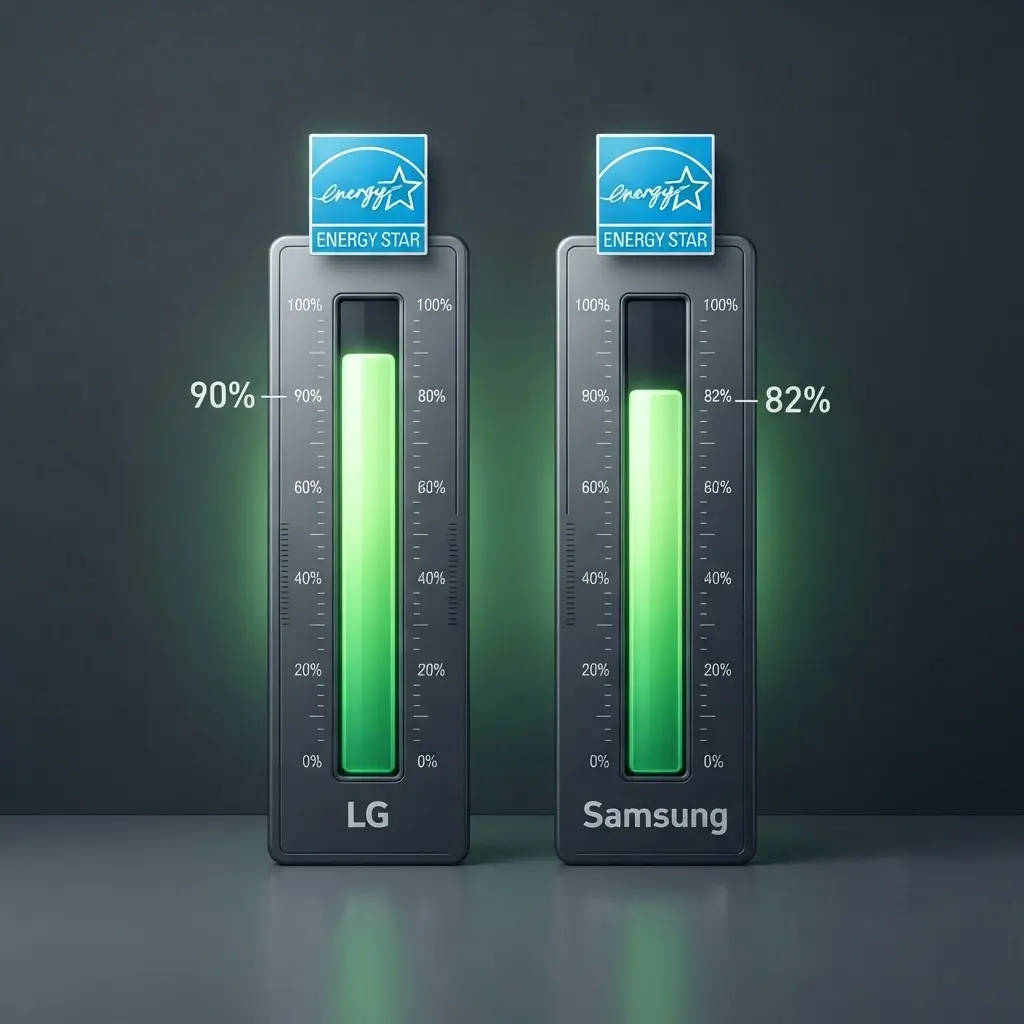
- Most LG refrigerators carry Energy Star certification.
- The Linear Inverter Compressor is specifically designed to reduce energy consumption, LG claims savings of up to 20% more energy compared to standard compressors.
- A typical Energy Star-certified refrigerator can save a family over $80 per year on electricity bills.
Samsung:
- Samsung refrigerators are also Energy Star certified across most of their lineup.
- However, models with the Family Hub display and advanced smart features consume slightly more power due to the always-on touchscreen and connected sensors.
- If you don’t need the smart display features, Samsung’s standard models are just as energy-efficient as LG’s.
Energy efficiency verdict: For pure energy savings, LG has a slight edge, especially over the 5–10 year lifespan of the appliance.
Smart Features in 2026
Smart refrigerators have come a long way. In 2026, both LG and Samsung offer impressive connected features, but they’re built for different types of users.
LG SmartThinQ (ThinQ AI):
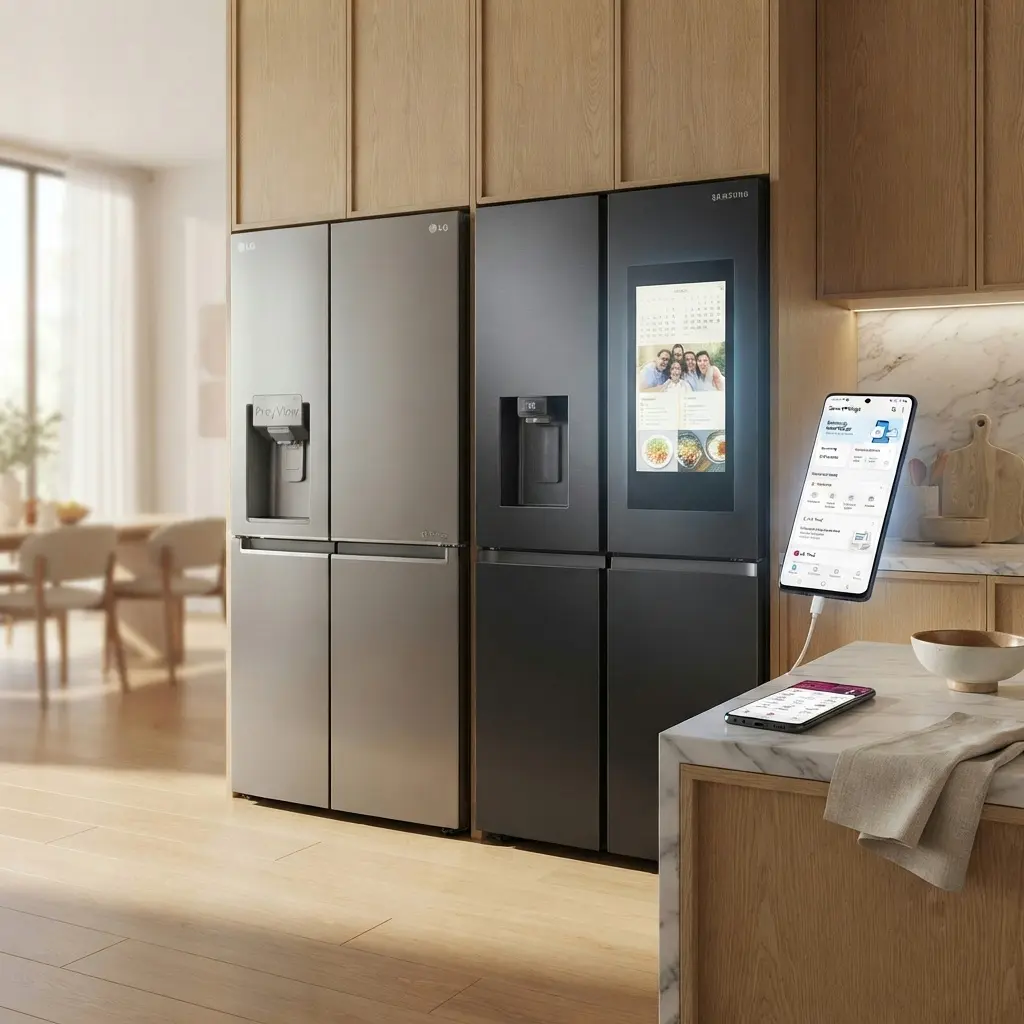
- Monitor and adjust fridge temperatures remotely from your phone.
- Run diagnostics without calling a technician, the app can identify common issues and guide you through fixes.
- Get usage reports and energy tracking.
- Works with Google Home, Amazon Alexa, and Apple HomeKit.
LG’s smart features are practical and straightforward. You use them when you need them, and they don’t get in the way.
Samsung SmartThings + Family Hub:
- The Family Hub is a built-in touchscreen display on select models, think of it as a tablet mounted on your fridge door.
- Set family calendars, leave voice or video notes, stream music or TV, and even see inside your fridge via internal cameras while you’re at the grocery store.
- AI-powered meal suggestions based on what’s currently in your fridge.
- Deep integration with Samsung SmartThings, plus compatibility with Google Home and Alexa.
Samsung’s smart features are more immersive and entertaining. But they also add to the purchase price, and some families genuinely don’t end up using the Family Hub much after the novelty wears off.
Smart features verdict: Samsung wins for the “wow” factor. LG wins for practical, no-fuss smart functionality.
Durability and Longevity
Buying a refrigerator is a long-term investment. You want something that’s still running reliably 10–15 years from now.
LG Durability:
- LG’s Linear Inverter Compressor comes with a 10-year warranty on most models, one of the best in the industry.
- Independent repair data consistently shows LG refrigerators have lower repair rates over a 10-year period compared to many competitors.
- Replacement parts are widely available and relatively affordable.
Samsung Durability:
- Samsung offers solid build quality, but has historically received more repair-related complaints, particularly around ice maker issues in French Door models.
- Warranties vary by model and region, typically covering the compressor for 5–10 years.
- Some users report difficulty finding Samsung-specific parts outside major cities.
Durability verdict: LG has the stronger track record for long-term reliability. This is one of the biggest factors families should weigh carefully.
Price Comparison
Neither LG nor Samsung is a budget brand, but there’s a real difference in where your money goes.
LG Pricing:
- Entry-level family models start around $900–$1,200.
- Mid-range French Door and Side-by-Side models run $1,300–$2,200.
- Premium InstaView models with smart features can reach $2,500+.
Samsung Pricing:
- Standard family models start around $1,000–$1,400.
- Family Hub models typically begin at $2,000 and can exceed $3,500 for large-capacity units.
- The Bespoke customizable line sits in the $1,800–$2,800 range.
Price verdict: LG offers better value for most families, especially when you factor in lower long-term energy costs and repair rates. Samsung is worth the premium if the Family Hub features genuinely fit your lifestyle.
LG vs. Samsung: Quick Specs Comparison Table
| Feature | LG | Samsung |
| Compressor Technology | Linear Inverter | Digital Inverter |
| Cooling System | Single evaporator | Twin Cooling Plus (dual evaporator) |
| Noise Level | Very quiet (44–46 dB) | Moderate (46–50 dB) |
| Energy Star Certified | Yes (most models) | Yes (most models) |
| Smart App | ThinQ AI | SmartThings |
| Touchscreen Display | Select models | Family Hub (select models) |
| Compressor Warranty | 10 years | 5–10 years (varies) |
| Average Starting Price | ~$900 | ~$1,000 |
| Best For | Reliability, efficiency | Smart features, style |
| Repair Track Record | Excellent | Good (some ice maker issues) |
Pros and Cons
LG Refrigerator, Pros
- Industry-leading quiet operation
- 10-year compressor warranty on most models
- Lower long-term energy costs
- Strong reliability record and widely available parts
- Practical, easy-to-use smart features
LG Refrigerator, Cons
- Smart features are less exciting compared to Samsung
- Design options are less customizable
- Interior layout can feel less modern on older models
Samsung Refrigerator, Pros
- Stunning, modern designs including the Bespoke customizable line
- Family Hub is genuinely useful for organized households
- Twin Cooling Plus keeps food fresher longer
- FlexZone compartment adds versatile storage
- Deep smart home integration
Samsung Refrigerator, Cons
- Higher upfront cost, especially for Family Hub models
- Some models have a history of ice maker issues
- Smart display adds ongoing energy draw
- Repairs can be more expensive outside urban areas
Which Brand Is Best for Your Family?
Here’s the honest answer, it depends on what matters most to your household.
Choose LG if:
- You want the most reliable refrigerator for the money
- Quiet operation is important (open-plan kitchen, sleeping areas nearby)
- You’re focused on long-term energy savings
- You have a large family that needs consistent, dependable cooling
- You don’t want to pay for smart features you won’t use
Choose Samsung if:
- You love tech and actually want to use the Family Hub features daily
- Kitchen aesthetics and modern design are important to you
- You want maximum flexibility in how you organize your food
- You’re buying for a smaller household or a couple that enjoys smart home integration
Quick personal tip: For families with young kids or households of four or more people, LG is almost always the smarter long-term investment. For tech-savvy couples or smaller households who love gadgets, Samsung’s features genuinely shine.
👉 [Read More: Most Reliable Refrigerator Brands 2026: Expert Repair Data To save your money]
Frequently Asked Questions
1. Which brand lasts longer, LG or Samsung?
Based on available repair data and user feedback, LG refrigerators tend to have a longer, more trouble-free lifespan. LG’s Linear Inverter Compressor comes with a 10-year warranty on most models, and independent studies consistently show LG refrigerators need fewer repairs over a 10-year period. Samsung builds solid appliances, but some models, particularly French door units, have had recurring complaints about ice maker reliability. If longevity is your top priority, LG is the safer bet.
2. Is Samsung’s Family Hub actually worth the extra cost?
For some families, absolutely, for others, not at all. The Family Hub is genuinely useful if you want to manage family calendars on your fridge, stream music while cooking, see inside your fridge remotely while shopping, or get AI-powered meal suggestions. However, Family Hub models typically add $500–$1,000 to the price. If your family won’t regularly use those features, you’re better off putting that money toward a higher-capacity or better-insulated model.
3. Which refrigerator brand is more energy-efficient in 2026?
Both LG and Samsung offer Energy Star certified refrigerators, so both are efficient by industry standards. However, LG’s Linear Inverter Compressor technology gives it a slight efficiency edge in standard operation, potentially saving families over $80 per year compared to non-certified models. Samsung models with the Family Hub display use slightly more electricity due to the always-on screen. If energy savings are a priority, LG wins this round.
4. Can I use LG or Samsung refrigerators with my existing smart home setup?
Yes, both brands are compatible with major smart home ecosystems. LG’s ThinQ app works with Google Home, Amazon Alexa, and Apple HomeKit. Samsung’s SmartThings platform connects with Google Home and Amazon Alexa, and Samsung devices connect especially well with other Samsung products (TVs, washing machines, etc.). If you’re already in the Samsung ecosystem, their integration is particularly seamless. If you use Apple HomeKit heavily, LG has the edge.
5. What size refrigerator does a family of four need?
A family of four typically needs a refrigerator with at least 20–25 cubic feet of total capacity. If you bulk-buy groceries, meal prep frequently, or have teenagers at home, aim for 25–30 cubic feet. Both LG and Samsung offer models in this range, LG’s French Door models and Samsung’s large Side-by-Side units are both excellent choices for growing families. Always measure your kitchen space first, especially ceiling height and door clearance.
Conclusion
At the end of the day, both LG and Samsung make genuinely excellent refrigerators in 2026. You’re not going to regret buying either one, as long as you buy the right one for your family’s actual needs.
If you want something dependable, energy-efficient, and built to last with minimal hassle, LG is the clear winner. The 10-year compressor warranty, quiet operation, and strong reliability record make it the smart long-term choice for most families.
If you love the idea of a connected, feature-rich kitchen and you’ll actually use the smart features Samsung offers, the extra investment is worth it. The Family Hub is genuinely impressive, and Samsung’s designs are hard to beat.
Still unsure? Think about what frustrates you most about your current fridge, too noisy? Not enough room? Too expensive to run? Let that guide your decision.
Ready to make the switch? Check out our top picks below and find the right model for your home.
Related Article You may Like
- LG ThinQ App Setup Guide for Refrigerators: Fix Common Errors Easily (2026)
- LG Refrigerators with Smart Inverter Technology: The 10-Year Warranty Trap You Missed!
- Samsung Family Hub Refrigerator 2026: AI Features & Hands-on Review To Save Your Grocery
- Samsung Bespoke AI Refrigerator 2026: Better Than a French Door?