
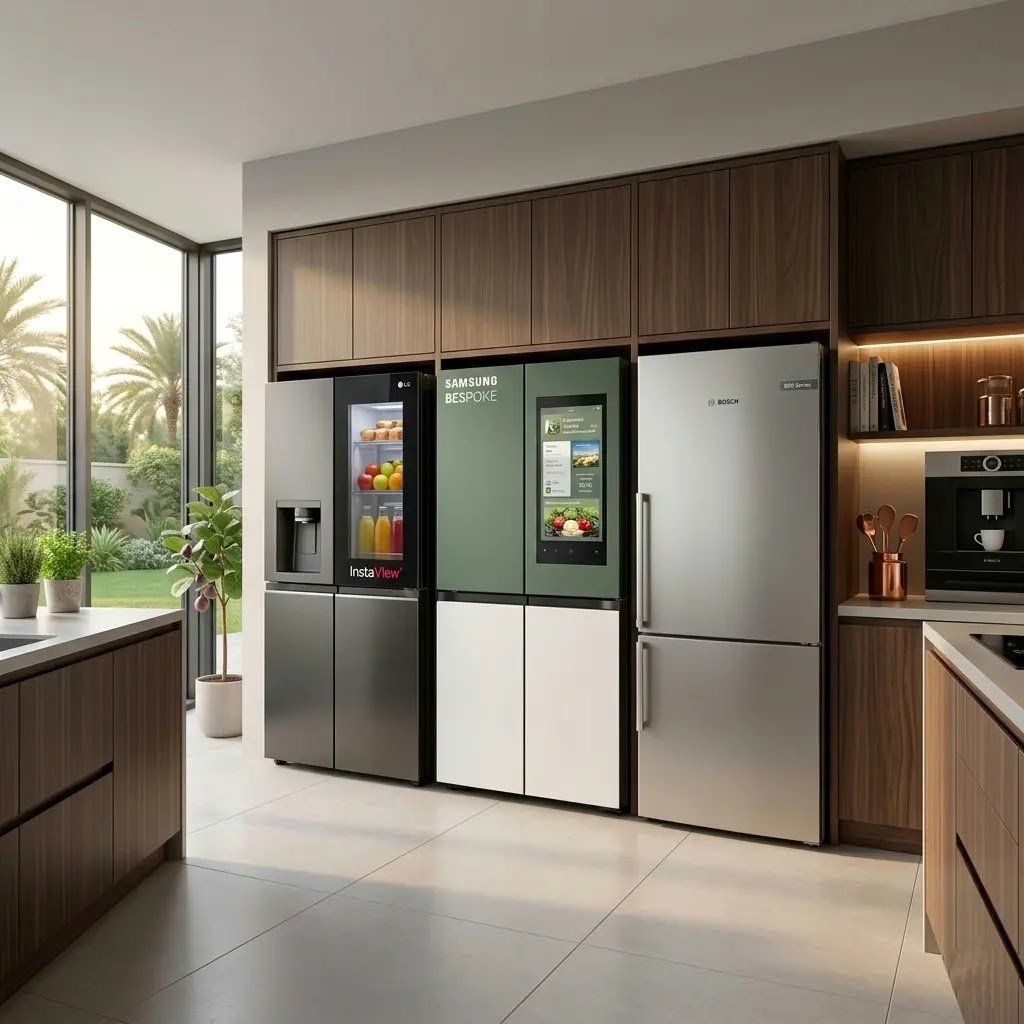
Most reliable refrigerators are based on reliability, and reliability used to mean one simple thing: how many years before it breaks. In 2026, that definition isn’t complete anymore; it’s also about how fast you can get parts when something eventually fails and whether the smart features you paid extra for are quietly shortening the appliance’s real lifespan.
A quick note for readers outside North America: several brands covered here, Kenmore in particular, are sold almost exclusively in the US and Canada. If you’re shopping in another market, focus on the manufacturer-level points (LG, Samsung, Whirlpool, Bosch, GE), since those brands and their underlying engineering are sold globally even where the specific US retail badge isn’t.
Table of Contents
How Reliability Rankings Actually Work in 2026
Before trusting any “most reliable brand” ranking, including this one, it’s worth understanding where that kind of data actually comes from. Consumer Reports publishes an annual reliability and owner-satisfaction survey covering major refrigerator brands, broken down by fridge style (top-freezer, side-by-side, French door, and built-in), based on member-reported repair history and satisfaction rather than manufacturer-supplied claims. Their most recent rankings found that reliability varies significantly by style within the same brand; Samsung, for example, has scored strongly in some categories while ranking near the bottom in others, and Frigidaire has consistently landed near the bottom overall across recent survey cycles, while Whirlpool and Amana have trended toward the top.
The honest takeaway: there’s no single number that captures “most reliable” across an entire brand’s full lineup. What follows is a qualitative breakdown grounded in that kind of published reliability data and repair-technician consensus, not invented statistics dressed up as precision.
Whirlpool and GE: The Old Guard of Durability
Whirlpool doesn’t try to be a smartphone; it tries to be a refrigerator. This brand is consistently the favorite of independent repair technicians because units are straightforward to diagnose and even easier to fix. Their side-by-side and top-freezer models remain a benchmark for mechanical simplicity in 2026.
The Bright Side:
- Simple mechanical designs with fewer failure points
- Parts widely available through standard appliance-parts channels, not just brand-specific suppliers
- Generally resistant to high-humidity environments
The Trade-Offs:
- Noisier operation compared to LG or Bosch
- Interior components (shelving, bins) can feel less premium
- Fewer high-end smart features for buyers who specifically want them
GE follows a similar reliability philosophy to Whirlpool, with one of the largest replacement-parts networks in the industry, a genuine practical advantage once a unit is old enough that manufacturer support has thinned out. Where GE’s higher-end Profile and Café lines add smart features, they inherit some of the same complexity trade-offs discussed in the Smart Fridge Paradox section below.
👉 [GE vs Whirlpool Refrigerator: 5 Costly Faults Exposed (2026)]

LG: The Efficiency Leader With a Complicated Compressor History
LG remains a strong performer on energy efficiency and cooling technology; its inverter-driven compressors and multi-zone cooling systems are genuinely ahead of much of the market on paper. If temperature stability and produce longevity are your top priorities, LG’s engineering is competitive with anyone on this list.
The Bright Side:
- Strong energy efficiency and temperature stability in normal operation
- Quiet compressor operation compared to older single-speed designs
- Well-regarded interior lighting and space management
The Trade-Offs:
- LG has faced multiple class-action lawsuits tied to linear compressor reliability on earlier model generations, with settlements that extended warranty coverage on affected units
- Control boards are noted by technicians as more sensitive to voltage fluctuation and heat than some competitors’ simpler designs
👉 [LG linear compressor lawsuits explained: what current buyers should know]
I want to be precise here rather than overstate this: I don’t have verified, source-backed confirmation of exactly how much LG’s more recent compressor generations have or haven’t changed since the lawsuits, so I won’t claim the risk is “solved” or state a specific improvement figure. What’s fair to say is that the documented history is real, warranty coverage exists because of it, and buyers should factor local authorized service availability into the decision rather than assuming the concern is fully behind the brand.

Samsung: Innovation vs. the Ice-Maker Struggle
Samsung’s design language and smart-home integration remain genuinely ahead of most competitors, with flexible zone storage, strong smart-home ecosystem compatibility, and some of the most polished finishes on the market. Twin cooling designs on several models help reduce odor transfer between compartments, a real and noticeable improvement over older shared-air systems.
The Bright Side:
- Flexible interior zoning for varied storage needs
- Strong smart-home ecosystem integration
- Distinctive, premium design finishes
The Trade-Offs:
- Ice maker freezing and jamming is a frequently reported complaint, particularly in humid climates
- Touchscreen and software-based features can be expensive to repair once out of warranty
- Reliability varies noticeably by fridge style; published rankings have shown Samsung performing well in some categories and poorly in others within the same model year
👉 [fixing a Samsung refrigerator ice maker that keeps freezing up]

Bosch: Premium Engineering, Premium Repair Costs
Bosch’s dual-compressor and dual-evaporator systems are genuinely well-regarded for food preservation, running independent cooling zones for the fridge and freezer compartments similarly in spirit to Dual Cool-style systems from other premium brands. Build quality is consistently rated highly.
| Brand Factor | Bosch (800 Series) | GE (Profile/Café) |
| Standout strength | Dual evaporator system for independent humidity control | Very large, accessible replacement-parts network |
| Main trade-off | Specialized labor and parts can be more expensive when service is needed | Turbo Cool fan noise was reported more often than on quieter competitors |
| Best fit | Buyers prioritizing food preservation science over easy local service | Buyers prioritizing long-term parts availability over premium finish |
The catch worth knowing before buying Bosch specifically: because it’s a less common brand in some regions compared to Whirlpool or GE, finding a local technician comfortable working on it can take longer, and parts sourcing sometimes requires going through specialized channels rather than a generic parts counter.
👉 [Bosch vs Whirlpool refrigerators, which is actually more reliable]
👉 [Bosch Refrigerator Review: Is the Premium Price Worth It After 3 Years?]

Where Frigidaire and Kenmore Fall Short
Both brands show up consistently in the lower or more inconsistent tiers of published reliability surveys. Frigidaire in particular has ranked near the bottom overall in recent Consumer Reports cycles, though it’s worth noting that reliability scores vary significantly by specific model and fridge style rather than being uniformly poor across the entire lineup.
Kenmore’s situation is structurally different and worth understanding on its own terms: Kenmore is a retail badge, not a manufacturer, and different Kenmore Elite model numbers are actually built by LG, Whirlpool, or other manufacturers depending on the specific model prefix. This means a blanket reliability score for “Kenmore” as a brand is somewhat misleading; the real determining factor is which manufacturer actually built the specific unit you’re looking at.
👉 [Kenmore Elite Refrigerator 795 Series: Why to Avoid These Fridges]
The Smart Fridge Paradox
As a 2026 buyer, it’s worth understanding a pattern that shows up across nearly every brand: the more connected and feature-dense a refrigerator gets, the more points of failure it typically introduces. A built-in touchscreen or Wi-Fi-connected sensor adds real convenience, but electronic boards are more sensitive to heat and humidity than a traditional mechanical thermostat, and published data has generally shown smart-feature-heavy models carrying higher service rates than simpler counterparts in the same lineup.
This doesn’t mean smart features are inherently a bad choice; for many households, the convenience is worth the trade-off. But if long-term mechanical reliability is genuinely your top priority over connected features, a simpler, non-touchscreen model from a mechanically focused brand is the safer bet, regardless of which brand name is on the door.
There’s a useful diagnostic question here that most buyers never think to ask themselves in the showroom: how often do you actually expect to use a given smart feature versus how often you’ll simply want the fridge to keep food cold without drama? A family that genuinely uses recipe suggestions, grocery-tracking cameras, or voice assistants daily is getting real, ongoing value that may justify the added repair risk. A household that would use those features a handful of times before ignoring them is paying an ongoing reliability tax for convenience it won’t actually draw on, and that’s a more honest way to weigh the decision than treating “smart” as an automatic upgrade.
The 2026 Maintenance Blueprint
Even the most reliable refrigerator on this list will underperform its expected lifespan without basic upkeep. Three habits matter more than brand choice for long-term reliability:
- Clean the condenser coils every 6 months. Many modern fridges route coils along the bottom of the unit, where they trap pet hair and dust, forcing the compressor to work harder than it should.
- Protect against voltage fluctuations. Modern inverter boards, especially on LG and Samsung units, are more sensitive to power fluctuations than older single-speed compressor designs. A quality surge protector is a low-cost insurance policy.
- Check door seal integrity periodically. A simple test: close the door on a piece of paper or a thin bill and try to pull it out. If it slides out too easily, the seal may be compromised, which causes the compressor to run far more than necessary, trying to compensate for lost cold air.
👉 [How to Clean & Restore a Moldy Refrigerator Gasket Save Your $100]
Total Cost of Ownership Across Brands
Purchase price is only one part of the real cost of owning a refrigerator for a decade or more. Parts availability, typical repair cost when something does fail, and how often that failure happens all factor into the honest total cost picture, and this is where the brands above genuinely separate from each other more than the sticker price alone would suggest.
| Cost Factor | Whirlpool/GE | LG/Samsung | Bosch |
| Typical repair accessibility | High-quality parts and technicians widely available | Moderate; availability varies by region. | Lower, often requires specialized service |
| Smart-feature repair risk | Low (fewer smart features on base models) | Higher on touchscreen/connected models | Moderate |
| Long-term parts cost | Generally lower, standard components | Can be higher for proprietary electronics | Higher, specialized parts |
The hidden cost most buyers don’t think about upfront: a cheaper repair bill on a Whirlpool doesn’t just save money once; it means a mechanical hiccup is far less likely to become a “just replace the whole fridge” decision the way it more often does on brands where specialized parts and labor make repair less economically worthwhile.
This math plays out differently depending on how long you plan to keep the appliance. A household planning to move or renovate within a few years may reasonably prioritize upfront price and features over long-term repair economics, since they’re unlikely to be the one dealing with a decade-out failure. A household planning to stay in the same kitchen for 10-15+ years is exactly the buyer for whom this total-cost calculation matters most; the gap between a modest in-home repair and a repair requiring specialized parts and labor (often several hundred dollars USD more, depending on region), repeated even once or twice over that span, can meaningfully offset a lower sticker price at purchase.
Frequently Asked Questions: Most Reliable Refrigerator Brands
1. Why do repair technicians so often recommend Whirlpool over Samsung or LG?
Technicians generally favor brands with modular, standardized parts that are straightforward to diagnose and replace. Samsung’s and LG’s more tightly integrated electronics and proprietary components can mean a simple fix turns into a full assembly replacement.
2. Is the LG linear compressor still a risk in 2026?
The documented history behind the lawsuits and warranty extensions is real, and buyers should factor it into their decision. I don’t have verified data confirming exactly how much newer compressor generations have changed the underlying risk, so it’s worth checking for local authorized service availability as a practical safeguard regardless.
3. How often should I replace my refrigerator’s water filter?
Roughly every 6 months under normal use is the standard guidance across most major brands, regardless of whether your specific model displays a reminder. Waiting until flow noticeably slows means filtration effectiveness has likely already degraded.
4. Is Kenmore a reliable brand overall?
Not as a single, consistent answer, Kenmore is a retail badge applied to units built by several different manufacturers. The prefix on the model number tells you who actually built it, and that matters far more than the Kenmore name itself.
5. Are smart refrigerators actually less reliable, or is that overstated?
It’s a real, widely observed pattern rather than pure exaggeration; added electronics introduce more points of failure, and touchscreens, in particular, are more exposed to heat and humidity than the compartments they’re mounted in. It’s a genuine trade-off to weigh, not an absolute rule that dooms every smart fridge.
6. Which brand has the best parts availability if something breaks years down the line?
Whirlpool and GE are generally considered the strongest here, largely because their parts are widely distributed across both branded and generic appliance-parts channels.
7. Should I pay more for a Bosch or a mainstream brand like Whirlpool?
It depends on your priorities. Bosch’s dual-evaporator food preservation engineering is genuinely excellent, but you’re trading some ease of local repair for that performance, a fair trade if food preservation quality matters more to you than repair convenience.
Final Verdict
If you want a refrigerator that simply keeps running with minimal drama, Whirlpool or GE remain the safest, most field-serviceable choices in 2026. If cooling performance and energy efficiency are your top priorities and you’re comfortable being deliberate about maintenance and local service access, LG remains genuinely competitive despite its compressor history. Samsung is the strongest pick for buyers who want smart-home integration and flexible interior design and are willing to accept somewhat less consistent reliability in exchange. Whatever you choose, the brand name matters less than most buyers assume; consistent maintenance and an honest understanding of each brand’s actual trade-offs will do more for your fridge’s lifespan than the badge on the door.