
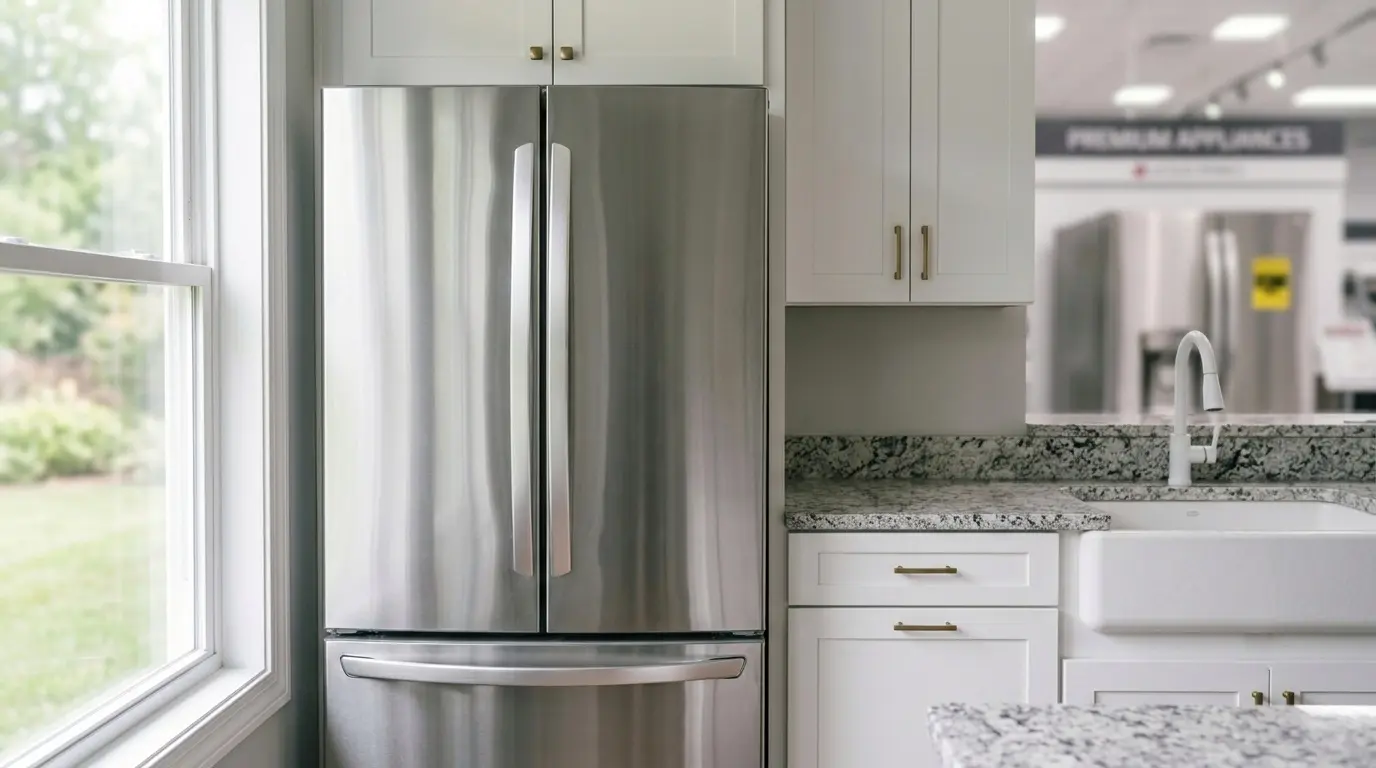
Every LG refrigerator listing dangles the same promise, a higher-efficiency model that costs more upfront but “pays for itself” in energy savings. Technicians hear this pitch repeated by customers who’ve read it on a spec sheet, and the honest answer is more nuanced than either the marketing or the skeptics online admit: sometimes it genuinely pays off, and sometimes you’re paying a premium for a number that barely moves your electric bill.
Table of Contents
How LG Actually Achieves Higher Energy Efficiency
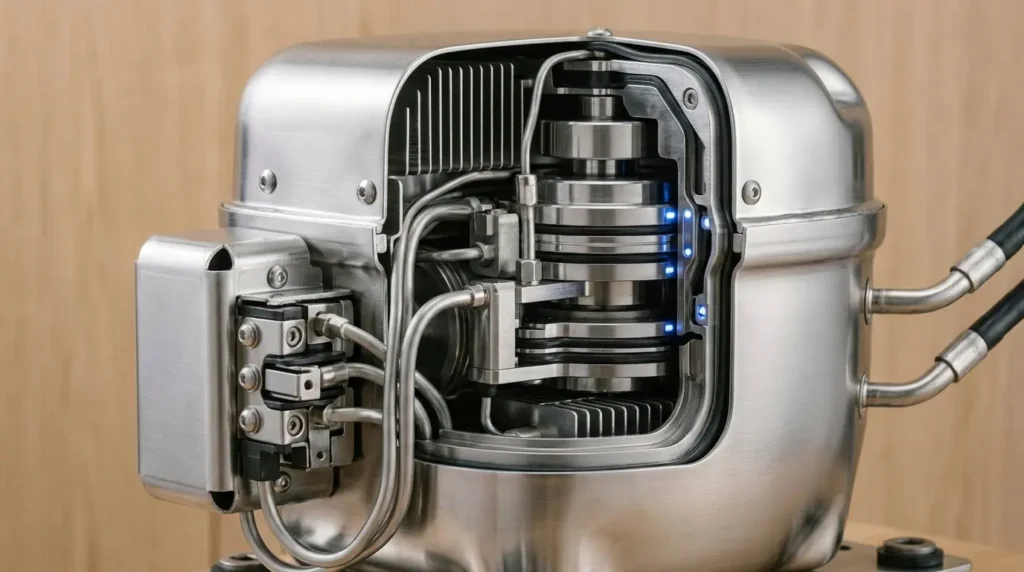
LG’s higher-efficiency refrigerators aren’t more efficient because of a single flashy feature; it’s a combination of compressor technology, insulation quality, and door-seal engineering working together. The core driver across nearly every efficient LG model is the Linear Compressor, which uses a piston-based, frictionless design instead of the traditional rotary compressor found in base-tier units. This allows the compressor to run at variable speeds rather than simply cycling on and off, which reduces the energy spikes that happen every time a standard compressor kicks back on.
Beyond the compressor, efficiency gains come from vacuum-sealed insulated panels used in select premium LG models, which trap far less heat transfer through the refrigerator walls than standard foam insulation. This matters more than most buyers realize, since a refrigerator runs continuously, 24/7, for years; even a small reduction in heat transfer through the walls compounds into meaningful savings over a decade of constant operation.
| 💡 Insider Knowledge: When diagnosing “my energy bill went up after buying an efficient LG fridge,” the first check isn’t the compressor; it’s door seal contact and whether the unit is level. A warm-air leak forces even a perfectly efficient compressor to work overtime. |

The Real Math: Calculating Break-Even on a Price Premium
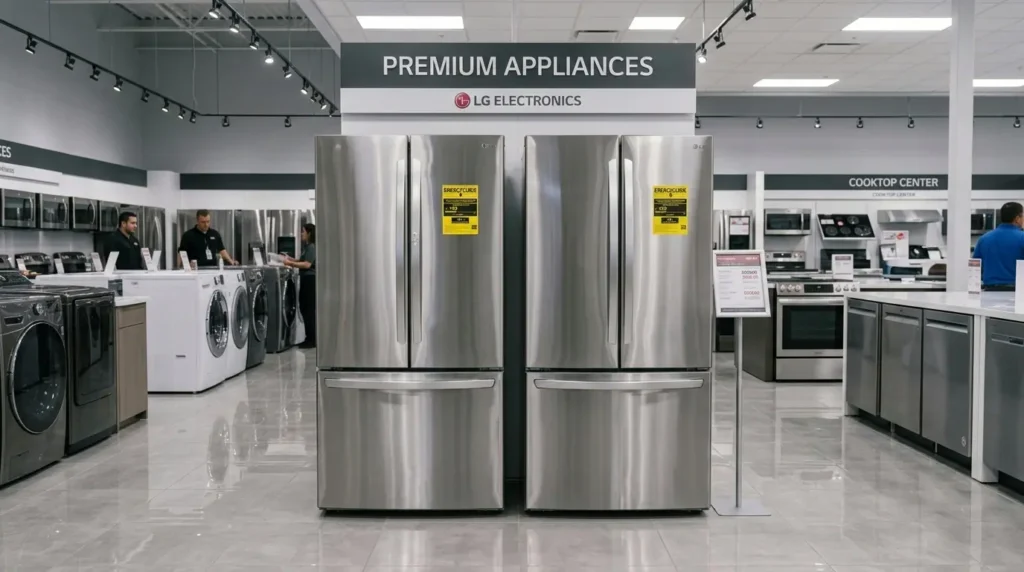
The question “Is it worth the price?” only has a real answer once you calculate your specific break-even point, and it’s simpler than most buying guides make it sound. Take the price difference between the efficient model and the comparable base model, then divide it by the estimated annual energy savings (available on the EnergyGuide label as an estimated yearly operating cost, which most buyers glance past without using).
For example, if an efficient LG model costs $250 more than a comparable base model, and the EnergyGuide labels show a $30/year difference in estimated operating cost, the break-even point is roughly 8.3 years. Since most refrigerators are kept 10 to 15 years, that premium does pay off, but if the price gap were $500 for the same $30/year savings, you’d be looking at nearly 17 years to break even, which is longer than many households keep the appliance at all.
This calculation is the single most useful thing a shopper can do before paying extra for efficiency, and it takes under five minutes with the EnergyGuide labels of both models sitting side by side in the showroom or on the product page.
Which LG Efficiency Features Deliver Real Savings
Not all efficiency to branded features contribute equally. Based on how these systems actually behave in the field, here’s what genuinely reduces energy consumption:
Linear Compressor: This is the single biggest legitimate efficiency driver in LG’s lineup. The variable-speed operation directly reduces both energy spikes and mechanical wear compared to fixed-speed rotary compressors, and the savings are measurable, not marketing fluff.
Door-in-door design genuinely reduces energy loss in households that access the fridge frequently, since the smaller inner door limits how much cold air escapes on quick grabs (drinks, condiments) compared to opening the full refrigerator door every time.
Smart cooling / multi-air flow diffusers: these help maintain consistent temperature with less compressor cycling, which does translate to measurable efficiency gains, particularly in larger-capacity models where temperature consistency is harder to maintain.
Which Efficiency Features Are Mostly Marketing
Wi-Fi/smart connectivity features: these add convenience and diagnostics but do not meaningfully reduce the refrigerator’s own energy consumption. Any “energy usage tracking” via an app is a monitoring tool, not an efficiency mechanism, and shouldn’t be weighed as a reason a model is “more efficient.“
Higher-tier ice maker systems: dual or rapid ice makers add convenience but typically increase energy draw slightly rather than reducing it, since more ice production means more freezer-to-cycle demand; don’t expect these to contribute to efficiency claims on the same model.
Aesthetic/finish upgrades: Finishes like stainless steel versus a standard finish have no meaningful impact on energy efficiency despite sometimes being bundled into “premium efficient” model tiers; this premium is purely cosmetic and shouldn’t factor into an efficiency-based purchase decision.
Comparing LG Efficiency Tiers Side by Side
| Tier | Compressor Type | Typical Price Premium | Realistic Break to Even |
| Base/Standard | Rotary compressor | — | N/A |
| Mid-Tier Efficient | Linear Compressor, standard insulation | $150 to 300 | 5 to 10 years |
| Premium Efficient | Linear compressor and vacuum to insulated panels | $400 to 700 | 12 to 20+ years |
| Smart/Connected Premium | Same as above + Wi-Fi to app features | $600 to 900 | Rarely breaks even on energy alone |
The premium tier’s higher price is often justified more by capacity, features, and design than by energy savings alone; the vacuum insulation genuinely helps, but the dollar-for-dollar payback period is long enough that efficiency shouldn’t be the primary reason to choose that tier unless you’re keeping the fridge 15+ years.
When the Premium Is NOT Worth It
If you replace refrigerators roughly every 8 to 10 years rather than running one to the end of its mechanical life, the premium tier rarely breaks even before you’ve already moved on to the next purchase. Similarly, in regions with low electricity costs, the annual dollar savings on the EnergyGuide label shrink proportionally, which stretches the break-even timeline even for the mid-tier efficient models that make sense in higher-cost electricity regions.
| 💡 Insider Knowledge: A question technicians ask that most homeowners never think to check: “How many people open this fridge per day, and for how long each time?” Frequent, prolonged openings erode a linear compressor’s efficiency advantage regardless of the underlying technology. |
How Usage Habits Change the Answer
The break to even math above assumes average usage patterns, but real households vary enough that the “worth it” answer genuinely differs person to person. A retired couple who opens the fridge a handful of times daily and keeps the kitchen at a stable temperature will realize closer to the EnergyGuide’s estimated savings than a household running a home daycare with the fridge opened dozens of times daily by multiple people.

Kitchen placement also matters more than most buyers expect; a refrigerator positioned near an oven, in direct sunlight, or in a poorly ventilated corner works harder regardless of its compressor technology, which narrows the efficiency gap between a base model and a premium model because both are compensating for the same external heat load.
👉 [LG ThinQ App Setup Guide for Refrigerators: Fix Common Errors Easily (2026)
👉 [LG refrigerator door seal maintenance and replacement]
👉 [LG Fridge Energy-Saving Secret: 1 Setting Cuts Your Bill (2026)]
👉 LG Smart Inverter Refrigerator: 10-Year Warranty Explained
LG Energy-Efficient Refrigerator: FAQ
1. Does LG’s energy-efficient refrigerator actually cost less to run, or is it mostly marketing?
The linear compressor technology behind most efficient LG models delivers genuine, measurable energy savings; this specific mechanism is not marketing fluff, though not every “efficient” feature bundled alongside it contributes equally.
2. How long does it typically take for an efficient LG refrigerator to pay for itself?
It depends entirely on the price premium and your local electricity cost, but mid-tier efficient models typically break even in 5 to 10 years, while premium vacuum-insulated tiers often take 12 to 20 years or longer.
3. Does a bigger LG refrigerator always use more energy than a smaller one?
Generally yes, larger capacity increases baseline energy draw, but a larger efficient model can still use less energy than a smaller inefficient one, so capacity and efficiency tier should be evaluated together, not separately.
4. Is Wi-Fi connectivity part of what makes an LG refrigerator “energy efficient”?
No, smart connectivity features are convenience and monitoring tools, not energy reduction mechanisms, and shouldn’t influence an efficiency-based purchase decision.
5. Can poor installation cancel out an efficient refrigerator’s energy savings?
Yes, and this is more common than people expect; an unlevel unit or a compromised door seal forces even the most efficient compressor to work harder, which can erase most of the theoretical savings on the EnergyGuide label.
6. Does door opening frequency really make a measurable difference in energy use?
Yes, frequent or prolonged door openings force more compressor recovery cycling regardless of compressor type, which is why high-traffic households see a smaller efficiency gap between base and premium models than low-traffic households do.
7. Is it worth paying extra for vacuum-insulated panels specifically?
Only if you plan to keep the refrigerator for 12+ years or live in a region with high electricity costs; otherwise, the premium tier’s price gap is difficult to fully recover through energy savings alone within a typical ownership period.
Conclusion
LG’s energy efficiency claims aren’t hollow marketing, but “worth it” isn’t a universal yes; it depends on your specific price premium, local electricity rates, how long you’ll keep the fridge, and honestly, how often your household leaves the door open. Do the five-minute break to even math with the actual EnergyGuide labels in front of you before assuming the higher price tag pays for itself, and you’ll make a decision based on your kitchen instead of a marketing claim.