
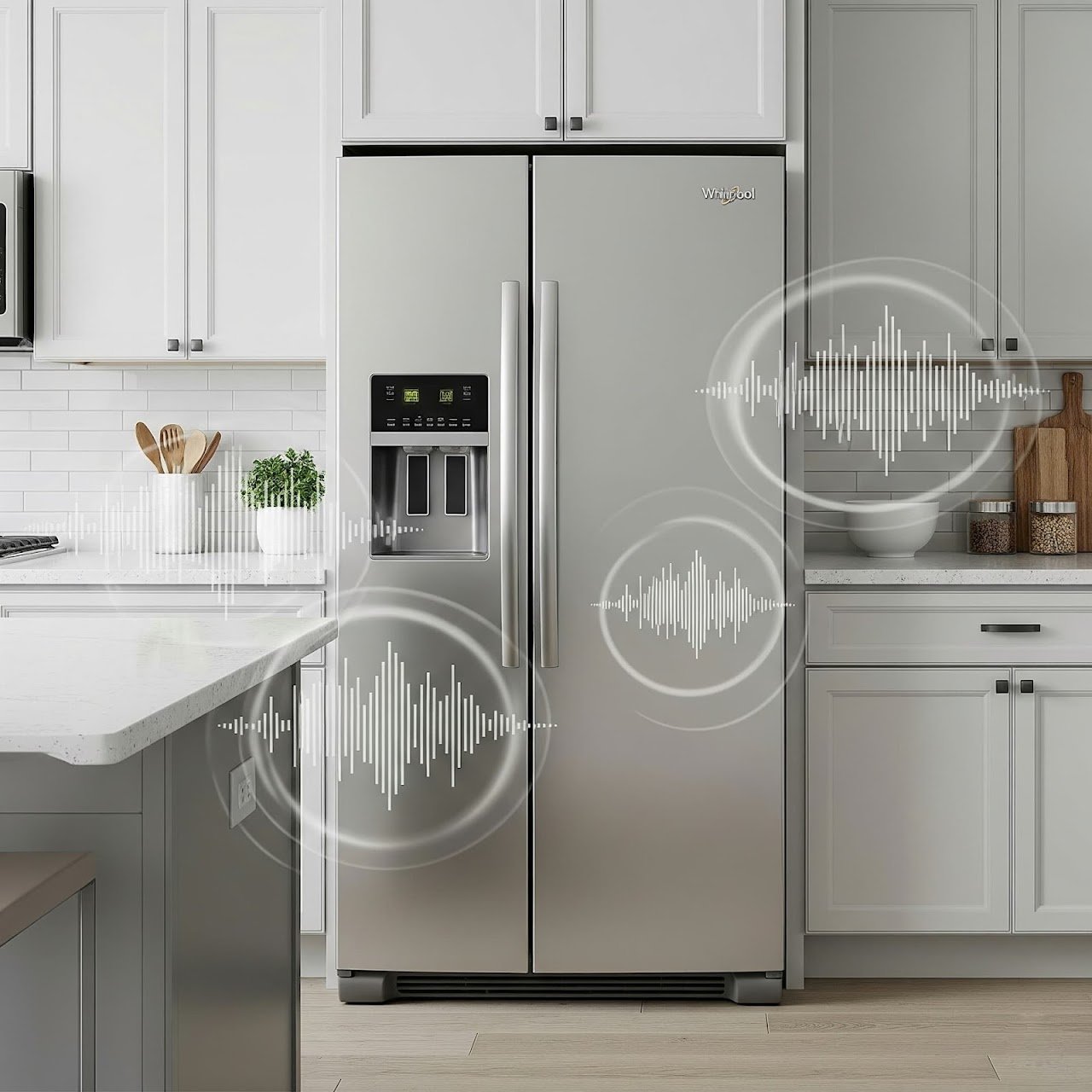
A refrigerator is one of the most reliable appliances in your home, which is exactly why it’s unsettling when your Whirlpool fridge suddenly starts making a noise you’ve never heard before. Some sounds are completely normal; others are an early warning sign. This guide breaks down the most common Whirlpool fridge noises, what each one usually means, and how to tell which ones need attention.
Table of Contents
Common Whirlpool Fridge Noises and Their Causes
1. Buzzing or Humming
A low buzzing or humming noise usually comes from the compressor or the fan. Compressors are designed to cycle on and off, so a steady hum during a cooling cycle is generally normal. If the noise is noticeably louder than usual, it often means the compressor is working harder than it should, commonly due to dirty condenser coils restricting airflow.

2. Clicking Sounds
Clicking often comes from the defrost timer or the start relay. A soft, occasional click every few hours as the fridge cycles is normal. Rapid or repeated clicking, especially paired with the Whirlpool fridge not cooling, usually points to a faulty start relay.
Insider timing trick: a normal defrost-timer click happens on a predictable schedule (roughly every 6–12 hours) and is a single, soft click. A failing start relay clicks repeatedly within seconds, almost like it’s trying and failing to start the compressor. If you’re hearing rapid clicks in quick succession rather than one isolated click, that’s the relay, not the timer.
3. Gurgling or Popping
Refrigerant moving through the coils naturally creates gurgling, bubbling, or popping sounds as it changes state during the cooling cycle. This is usually harmless. If the noise becomes unusually loud or is paired with poor cooling, it may indicate a refrigerant issue that needs professional service; refrigerant work isn’t a DIY task.
4. Rattling
Loose panels, unsecured water lines, or objects placed on top of the fridge are the most common causes. Before assuming a mechanical fault, check for anything external vibrating against the unit. If the rattling continues after ruling those out, it could point to a failing fan motor.

5. Squealing or Grinding
These noises typically point to a worn evaporator or condenser fan motor. Fans are essential for circulating air through the Whirlpool fridge and across the condenser coils, and a failing motor bearing produces a noticeable squeal or grind as it wears down.

Quick Diagnostic Checklist (Safe, No Tools Needed)
Before opening any panels, you can narrow down the cause just by listening and checking a few external things:
- Listen for timing patterns. Occasional, evenly spaced clicks = likely normal defrost cycling. Rapid repeated clicks = likely a failing relay.
- Check the coils’ accessibility. If you can see or reach the condenser coils (usually behind or underneath the Whirlpool fridge), look for visible dust buildup, a strong indicator behind a louder-than-usual hum.
- Do a “stethoscope” check. Technicians often press one end of a long wooden spoon or dowel against the Whirlpool fridge’s rear panel and their ear against the other end; this helps localize whether a noise is coming from the compressor area or the fan area without opening anything up.
- Check for external contact points. Gently press down on top of the Whirlpool fridge and along the sides; a rattle that stops means it’s something touching the unit, not an internal part.
- Confirm cooling is unaffected. A noise paired with normal cooling is lower priority than a noise paired with a warm fridge or freezer.
If your model is app-connected, it’s also worth a quick check there; some newer Whirlpool smart refrigerators can flag unusual compressor cycling or run times through the app, which can support what you’re hearing, though this feature varies by model and isn’t a substitute for the checks above.
Safety note: If you go beyond this external checklist and remove any back panel to inspect a fan or test a relay directly, always unplug the fridge first; never work on these components while the unit is powered.
Noise Reference Table: Cause, Urgency, and Next Step
| Noise | Likely Cause | Urgency | Next Step |
| Steady hum | Normal compressor cycling | Low | No action needed |
| Loud hum | Dirty coils / poor airflow | Low–Medium | Clean coils |
| Occasional single click | Normal defrost timer | Low | No action needed |
| Rapid repeated clicking | Faulty start relay | Medium | Test/replace relay |
| Gurgling/popping | Normal refrigerant flow | Low | No action needed |
| Loud gurgling + poor cooling | Possible refrigerant issue | High | Call a technician |
| Rattling | Loose panel or object | Low | Secure loose items |
| Persistent rattling | Failing fan motor | Medium | Inspect/replace fan |
| Squealing or grinding | Worn fan motor bearing | Medium–High | Replace fan motor |
Pros and Cons of DIY Noise Fixes
Pros
- Cost-effective compared to hiring a technician for simple issues
- Basic tasks like coil cleaning and securing loose panels require no special tools
- Catching and fixing minor noise sources early improves efficiency and extends the Whirlpool fridge’s lifespan
Cons
- Refrigerant leaks and compressor issues should only be handled by a licensed professional
- Incorrect handling of fan motors or relays risks damaging other components
- Compressor replacement, if it comes to that, is one of the more expensive refrigerator repairs, not a casual DIY project
Practical Tips to Reduce Whirlpool Fridge Noise
- Place your Whirlpool fridge on a level surface; uneven flooring is a common, overlooked cause of vibration-related rattling
- Leave at least 2 inches of clearance at the back for proper airflow
- Clean the condenser coils regularly to reduce compressor strain and the resulting hum
- If you’re a renter or don’t have repair tools on hand, start with the free fixes, levelling and coil cleaning, before considering a fan or relay replacement
For long-term upkeep beyond noise troubleshooting, see our full refrigerator maintenance guide.
👉 [Refrigerator maintenance tips to extend appliance life]
When to Call a Professional
Bring in a certified technician if:
- The noise is paired with poor cooling or a warm fridge/freezer
- You suspect a refrigerant leak (often a stronger gurgling sound combined with reduced cooling)
- The compressor itself seems to be the source of a loud or grinding noise
- You’ve completed the external checklist above and still can’t isolate the source
👉 [Whirlpool refrigerator compressor repair costs explained]

FAQ
1. Why does my Whirlpool fridge make a loud humming noise?
It’s usually the compressor or fan running under normal load. If it’s noticeably louder than usual, clean the condenser coils first; that resolves the majority of “louder hum” cases.
2. Is a clicking noise from my Whirlpool fridge normal?
Occasional, evenly spaced clicking from the defrost timer is normal. Rapid, repeated clicking, especially if the fridge isn’t cooling well, usually means the start relay is failing.
3. What should I do if my fridge rattles?
Check for loose panels, drip pans, or objects sitting on top of the fridge first. If the rattling continues after securing those, it may point to a failing fan motor rather than something external.
4. Why does my fridge gurgle or bubble after the door closes?
This is almost always just refrigerant moving through the coils as it changes state during the cooling cycle, completely normal in most cases, and not something to worry about unless it’s unusually loud or paired with poor cooling.
5. Can a noisy fridge fix itself, or does it always need repair?
Some noises, like an occasional defrost click or normal refrigerant gurgle, aren’t a problem at all and don’t need fixing. Noises tied to a specific failing part, a relay or fan motor, won’t resolve on their own and will typically get worse over time.
6. How much does it cost to fix a noisy Whirlpool fridge?
It depends entirely on the cause. Coil cleaning and levelling cost nothing but your time. A start relay is a low-cost part. A fan motor replacement is a moderate repair. If it turns out to be the compressor or a refrigerant issue, costs rise significantly; that’s a separate, larger repair decision.
7. When should I call a technician instead of troubleshooting further?
As soon as a noise is paired with reduced cooling, or if you suspect refrigerant involvement. Refrigerant handling requires licensing in most regions, and misdiagnosing a compressor issue as something simpler can waste time while food continues to spoil.
Conclusion
If your Whirlpool fridge is making a strange noise, the first step is figuring out which category it falls into: a normal operating sound, a simple external fix, or a sign of a failing part. Many noises, like defrost clicks and refrigerant gurgles, need no action at all. Others, like a failing relay or fan motor, are inexpensive fixes if caught early.
Start with the diagnostic checklist above, use the reference table to gauge urgency, and don’t hesitate to call a certified technician the moment cooling performance is affected; waiting on that specific combination is what turns a cheap fix into an expensive one.