
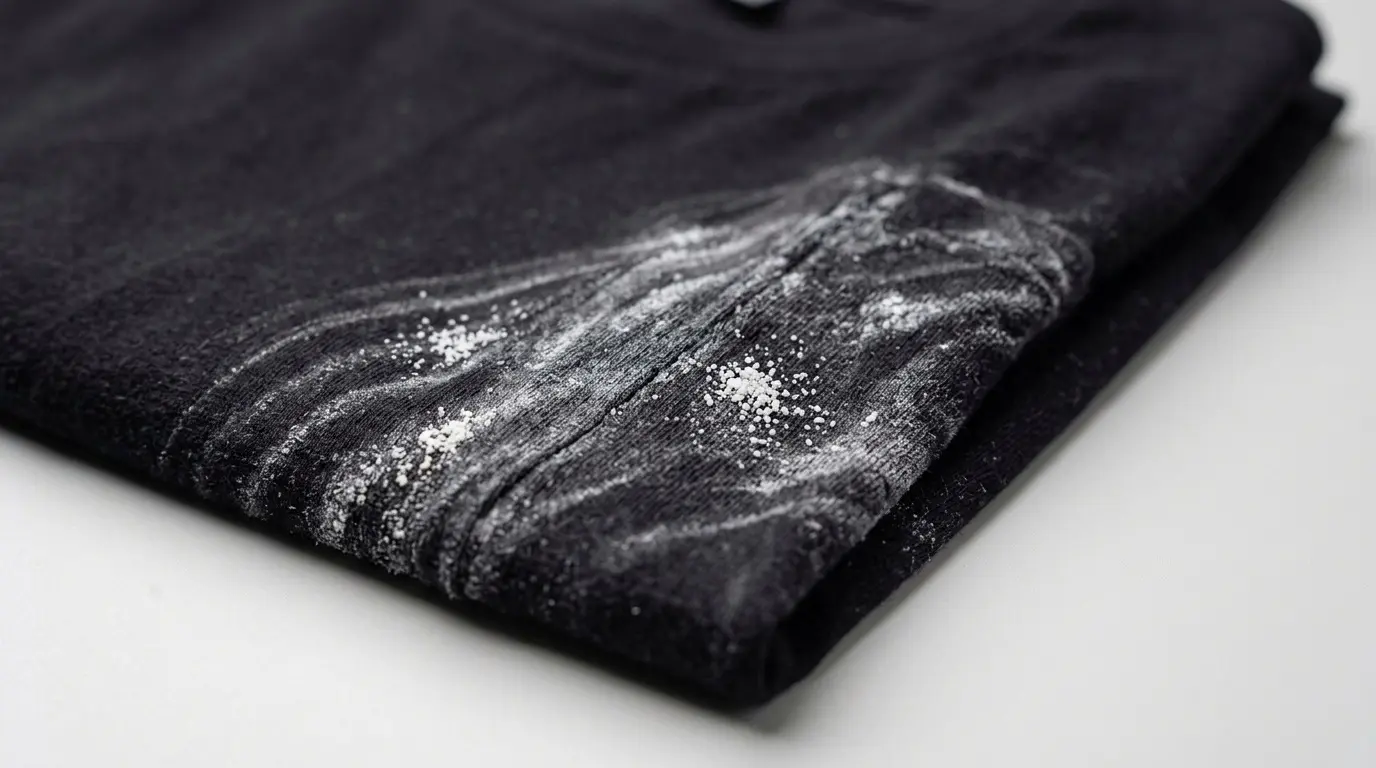
Pull a black shirt out of your Bosch washer and find chalky white streaks across it, and the instinct is to blame the detergent. Most of the time that’s only half the story, and treating it as purely a detergent problem is exactly why the residue keeps coming back. In this article we discuss why Bosch washer leave white residue on dark clothes: 6 real causes you must know.
Table of Contents
The Three Real Causes of White Residue
There isn’t one single explanation for white residue on dark fabric; there are three distinct mechanisms, and they look nearly identical to the eye. Detergent overdosing leaves undissolved surfactant film. Hard water leaves mineral scale that binds to fibers. And powder detergent that never fully dissolves leaves granular residue that dries into visible streaks.
Bosch washers, particularly models in the 300, 500, and 800 series such as the WAT28400UC or the WGB256AWY with Home Connect, are HE (high-efficiency) machines that use significantly less water per cycle than older top-load washers. That efficiency is good for utility bills, but it also means there’s less water available to rinse away whatever doesn’t dissolve properly in the wash, which is a large part of why this particular complaint shows up so often on Bosch models specifically compared to older, water-heavy machines.
It’s worth noting these three causes aren’t mutually exclusive. In households with genuinely hard water who are also using a bit too much detergent out of habit, both mechanisms compound each other, which is why some cases of this seem stubbornly resistant to a single fix, because a single fix was never going to address two overlapping causes at once.
Detergent Overdosing vs. Underdosing
This is the most common cause, and counterintuitively, both too much and too little detergent can produce the same visible residue, just through different mechanisms.
Overdosing leaves excess surfactant that the reduced water volume in an HE cycle can’t fully rinse away. That excess dries as a thin white film, most visible on dark or black fabric where any residue creates contrast. This is especially common in households that recently switched from a top-load machine, since the dosing habits from a 15-20 gallon top-load fill don’t translate to a Bosch HE cycle that may use closer to a third of that volume.
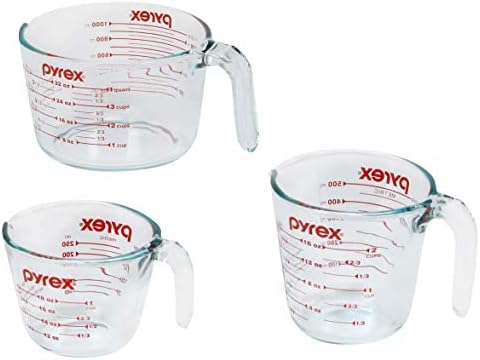
- 3-PIECE: Includes 1-cup, 2-cup, and 4-cup measuring cups that are perfect for baking, cooking, mixing and more. Dimensio…
- EASY TO READ: Featuring bold and large measurements in both ounces and milliliters making this effortless to read.
- EASY GRIP HANDLES: Adding milk to your cake batter, We got you covered. All Pyrex measuring cups feature a curved spout …
Underdosing is less obvious as a cause but happens when someone switches to a concentrated HE detergent and keeps using the same dose size they used for a regular detergent; the concentrated formula behaves differently in the wash and can separate rather than fully dissolve. A technician’s rule of thumb here: if residue appeared right after buying a new detergent bottle rather than gradually, dosing mismatch with a new formula is the more likely cause than a mechanical issue.
Hard Water Mineral Deposits
If your water carries a moderate-to-high mineral content, calcium and magnesium can bind to fabric fibers independently of detergent chemistry entirely. This shows up as a slightly gritty, chalky residue rather than a smooth film, and it tends to concentrate near seams and hems where fabric folds trap more moisture during the rinse cycle.

One detail worth knowing: mineral residue tends to get progressively worse over several wash cycles even without changing detergent brands, because it compounds with each cycle rather than resetting. Detergent-related residue, by contrast, usually shows up consistently from the first wash after a dosing change and doesn’t build cycle over cycle. This distinction alone is often enough to separate the two causes without needing a water test at all; if a household hasn’t changed detergent in months but residue has been creeping up gradually, hardness is the far more likely explanation.
The TDS water hardness test kit is the fastest way to rule this in or out before assuming it’s a detergent issue, since the visual difference between mineral residue and detergent film is subtle enough that most people can’t tell them apart just by looking.

- 17 IMPORTANT PARAMETERS: The Varify Premium Drinking Water Test Kit offers an unrivaled, complete analysis of your drink…
- PREMIUM QUALITY: Varify stands out with its professional-grade quality, ensuring that every test strip in the kit meets …
- EASY TO USE: Varify’s water test strips and Bacteria Test kits feature a user-friendly, color-coded system for quick and…
Undissolved Powder Detergent Residue
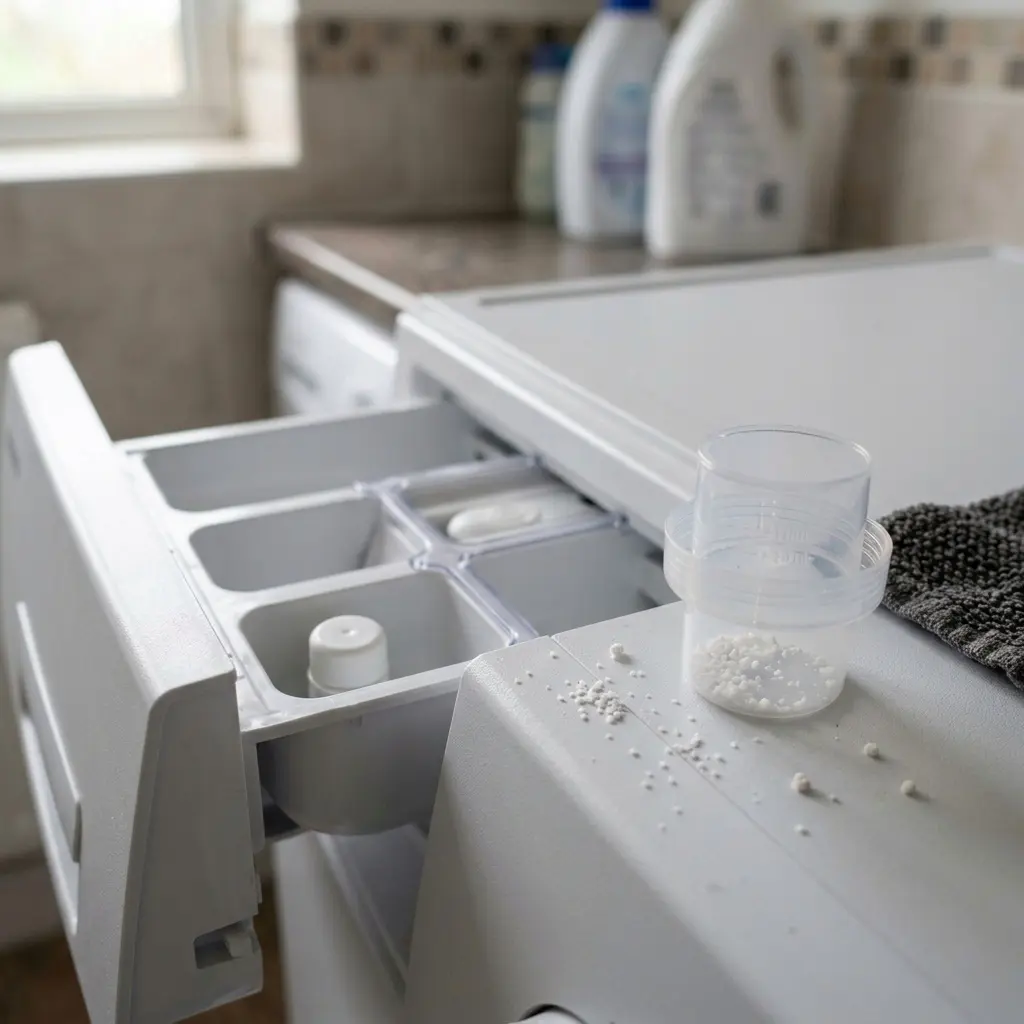
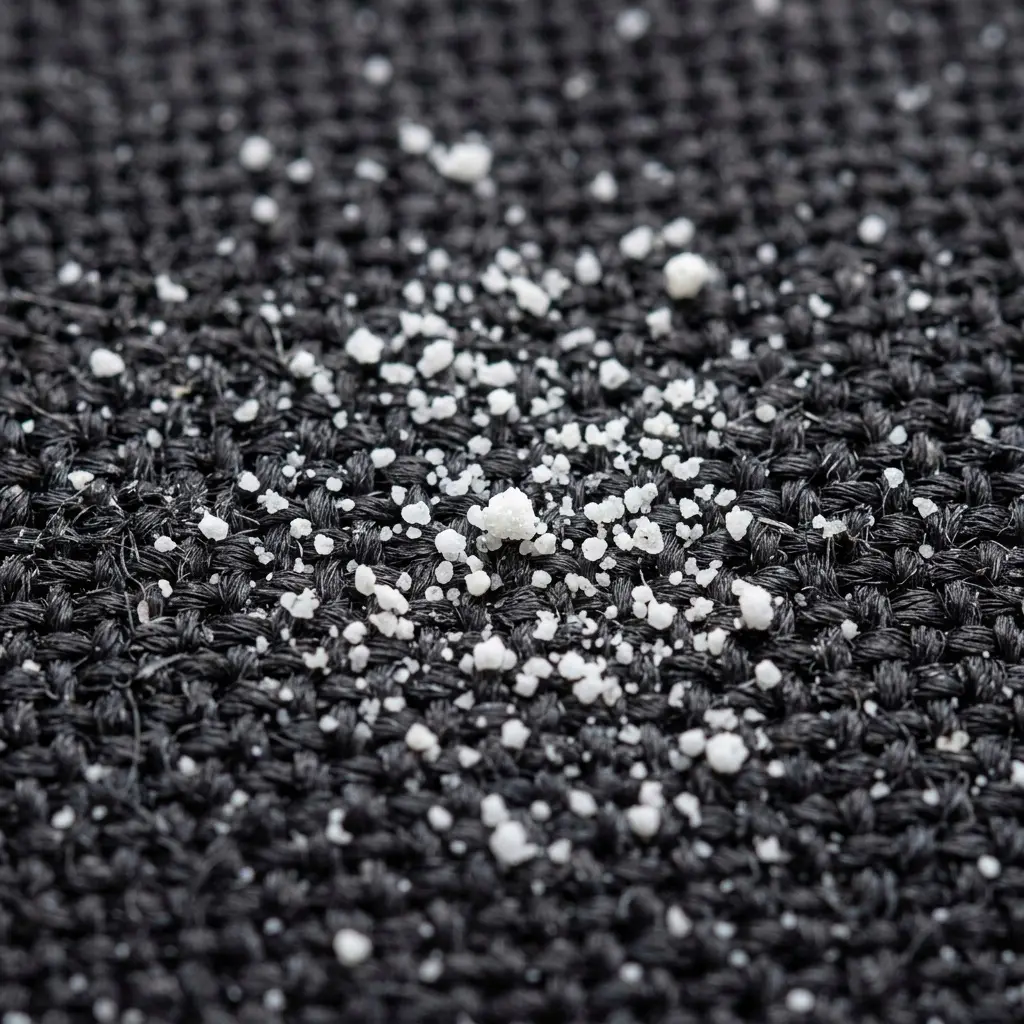
Powder detergent depends on water temperature to dissolve fully. In a cold wash cycle, which Bosch machines default to fairly often for energy efficiency and fabric care, powder can leave undissolved granules that settle into dark fabric and read as fine white specks once dry, distinct from the smoother film left by liquid detergent overdosing.
This is one of those things that gets misdiagnosed constantly. Homeowners often assume it’s a rinse cycle malfunction and start troubleshooting the machine itself when the actual cause is simply cold water plus powder detergent not fully activating. It’s worth checking your cycle’s water temperature setting before assuming anything mechanical is wrong.
There’s also a load-timing factor here that’s easy to miss: powder added directly into an already-loaded drum, rather than through the dispenser drawer, has less contact time with water before the wash agitation begins, which increases the odds of granules landing directly against fabric before fully dissolving. Bosch’s dispenser drawer is specifically designed to pre-mix detergent with incoming water before it reaches the drum, so bypassing it, even occasionally, raises the chance of this exact symptom.
Why Bosch’s Efficient Water Usage Makes This More Noticeable
Technicians who work on both HE and traditional washers notice this pattern constantly: the exact same detergent dose that looked fine in an older top-load machine will leave visible residue in a Bosch HE model, purely because there’s less water diluting and rinsing away whatever doesn’t fully dissolve.
This isn’t a flaw in the machine; it’s the tradeoff for the water efficiency Bosch is known for. But it does mean the dosing habits people bring over from older machines often need to be recalibrated specifically for HE cycles, not just “used a bit less” in a general sense. Bosch’s own cycle sensors adjust water fill based on estimated load weight, not on how much detergent was added, so the machine has no way to compensate automatically if dosing is off; that responsibility sits entirely with whoever’s loading the drawer.

Fabric Type and Load Size: The Overlooked Factors
Two variables that rarely get mentioned in general troubleshooting advice but genuinely affect how visible this residue becomes: fabric type and how full the drum is.
Synthetic blends and tightly woven cottons hold surface residue more visibly than looser knits, simply because there’s less texture to disperse the film across. A dark synthetic athletic shirt will often show detergent residue that a looser cotton t-shirt in the same wash barely displays, even though both received identical detergent exposure. This is why some people report the problem as “random”; it’s not random, it’s fabric-dependent.
Overloading the drum compounds all three causes simultaneously. A packed load reduces water circulation per garment, meaning less rinse contact reaches fabric buried in the middle of the load, regardless of whether the underlying cause is detergent dosing, hardness, or undissolved powder. Technicians checking a residue complaint will often ask about typical load size before anything else, because an overstuffed drum can make an otherwise mild dosing issue look far worse than it actually is.
How to Tell the Causes Apart
Here’s a comparison of what to look for with each cause, since correctly identifying which one you’re dealing with determines what actually needs to change:
| Cause | Texture | Where It Concentrates | Pattern Over Time |
| Detergent overdosing | Smooth, thin film | Even across garment | Consistent from first affected wash |
| Detergent underdosing | Faint, patchy streaks | Random, inconsistent | Appears after switching detergent type |
| Hard water minerals | Slightly gritty, chalky | Seams and folded areas | Worsens gradually over cycles |
| Undissolved powder | Fine granular specks | Scattered, speckled | Tied to cold-wash cycles specifically |
👉 [Washer Cold Wash Cycle Settings Explained] is useful context if temperature-related undissolved detergent seems like your likely cause.
If you’re seeing residue that worsens gradually across several weeks without any change in detergent or dosing, mineral buildup is the more likely explanation over a straightforward detergent issue, and that distinction matters because the two problems require completely different fixes.

What Happens If This Goes Unaddressed
Bonus insight worth flagging: residue left unaddressed doesn’t stay a purely cosmetic issue indefinitely. Mineral and detergent film that isn’t fully rinsed away tends to accumulate inside the drum gasket and dispenser pathways over repeated cycles, not just on fabric. Over months, this can start affecting how evenly detergent dispenses in future washes, creating a feedback loop where the residue problem gradually worsens even without any change in habits.
This is also the detail most homeowners miss when they notice residue “coming and going” rather than being constant: it often tracks with how recently the dispenser drawer and gasket were last cleaned, since a buildup reservoir there can release small amounts of trapped residue unpredictably during certain cycles, particularly higher-agitation ones.
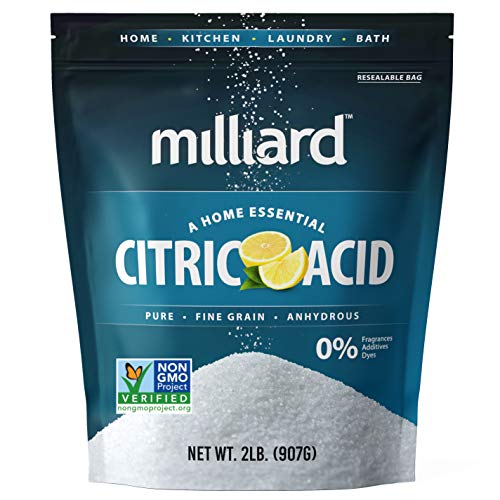
- 100% Pure & Non-GMO: High-quality, fine granular citric acid powder that is food-grade and Non-GMO. Food Grade Citric Ac…
- Enhance Freshness & Boost Flavor: Adds a tangy, refreshing taste to candy, soft drinks, and desserts. Prevents fruit bro…
- Multi-Purpose Natural Cleaner: Naturally removes hard water stains, limescale, and mineral buildup in coffee makers, dis…
Bosch Washer Leave White Residue on Dark Clothes: FAQ
1. Is white residue on dark clothes a sign my Bosch washer is broken?
Not typically. In the overwhelming majority of cases this is a detergent dosing, water hardness, or cycle temperature issue rather than a mechanical fault with the machine itself. A genuine mechanical cause, like a dispenser valve failing to fully drain, is far less common than the everyday causes covered above.
2. Why does this happen more with dark clothes specifically?
White residue is present in some form on lighter fabrics too, but it’s simply far more visible against dark or black fabric due to contrast, which is why the complaint is almost always framed around dark clothing rather than being unique to it.
3. Could my detergent brand be defective if this just started happening?
It’s more likely a change in dosing habit, water conditions, or wash temperature than a defective batch of detergent, since detergent formulation defects at the manufacturing level are comparatively rare. Timing the onset against any recent changes in your routine usually points to the real cause faster than assuming a bad batch.
4. Does running an extra rinse cycle fix this permanently?
An extra rinse can reduce visible residue for that specific load, but it doesn’t address the underlying cause, so the residue will likely return on the next wash unless the dosing, water hardness, or temperature issue is corrected at the source.
5. Can fabric softener cause similar white residue?
Yes, fabric softener overdosing or improper dispenser placement can produce a similar-looking film, which is a separate mechanism from detergent or mineral residue and worth ruling out separately if you use softener regularly, since it’s easy to mistake for a detergent-related cause.
6. Is this residue harmful to skin or fabric if I don’t fix it?
It’s generally not harmful in small amounts, though persistent mineral buildup over a long period can gradually stiffen fabric and reduce its lifespan, which is more of a fabric-care concern than a health one for most households.
7. Does this issue happen on all Bosch washer series or just certain models?
It can occur across Bosch’s HE lineup, including 300, 500, and 800 series models, since the underlying cause is tied to HE water efficiency and dosing habits rather than being specific to any one model line or feature set.
Final Word
White residue on dark clothes from a Bosch washer almost always traces back to one of three things: detergent dosing, water hardness, or undissolved powder from a cold cycle, often with fabric type and load size quietly making a mild case look worse than it is. Figuring out which combination you’re dealing with is the real first step before changing anything. Once you know the cause, the fix is usually a lot simpler than it looks.