
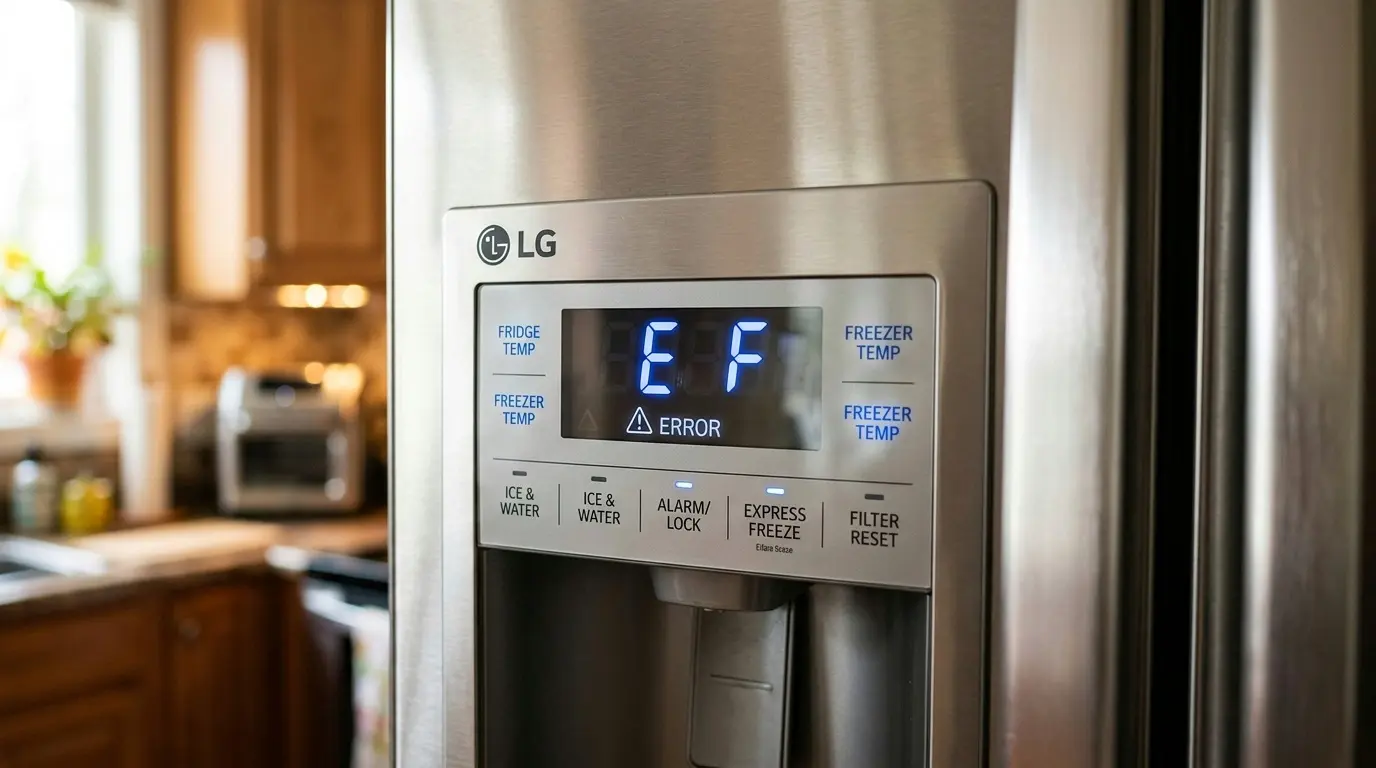
A blinking display on your LG refrigerator with a two-letter code isn’t the machine failing randomly; it’s the control board telling you exactly which sensor or system tripped a threshold it wasn’t supposed to. Knowing what that code actually means is the difference between a five-minute fix and paying a technician to diagnose something you could’ve narrowed down yourself.
Table of Contents
How LG Refrigerator Error Code System Actually Works
LG refrigerators run on a control board that continuously polls sensors, temperature thermistors, the defrost thermistor, compressor current sensors, and door switches and compares readings against expected ranges. When a reading falls outside that range for a sustained period (not just a momentary spike), the board logs it as a fault and displays the corresponding code on the front panel or dispenser display.
This matters because a single error code can appear from more than one underlying cause. The code tells you which system triggered the fault, not automatically why. A refrigerator technician’s first move when a code appears is rarely to replace the part the code seems to point to directly; it’s to check whether the fault condition is still active or whether it was a transient event, since a huge percentage of displayed codes are leftover flags from a temporary power fluctuation or the door being left ajar, not an actual failed component.
Temperature Sensor Codes
Er FF typically points to a freezer compartment sensor reporting a temperature outside its expected operating range. Quick check: this can be a genuinely failed thermistor, or it can be caused by a door seal issue letting warm air in continuously, which makes the sensor report accurately, but the underlying cause isn’t the sensor at all.
Er rF is the fresh food compartment equivalent, same mechanism, different zone. It’s worth noting these two codes get confused constantly because they look nearly identical on the display; the single-letter difference (F vs r) is the entire distinction between “freezer” and “fresh food,” and misreading which one you have leads people to troubleshoot the wrong compartment entirely.
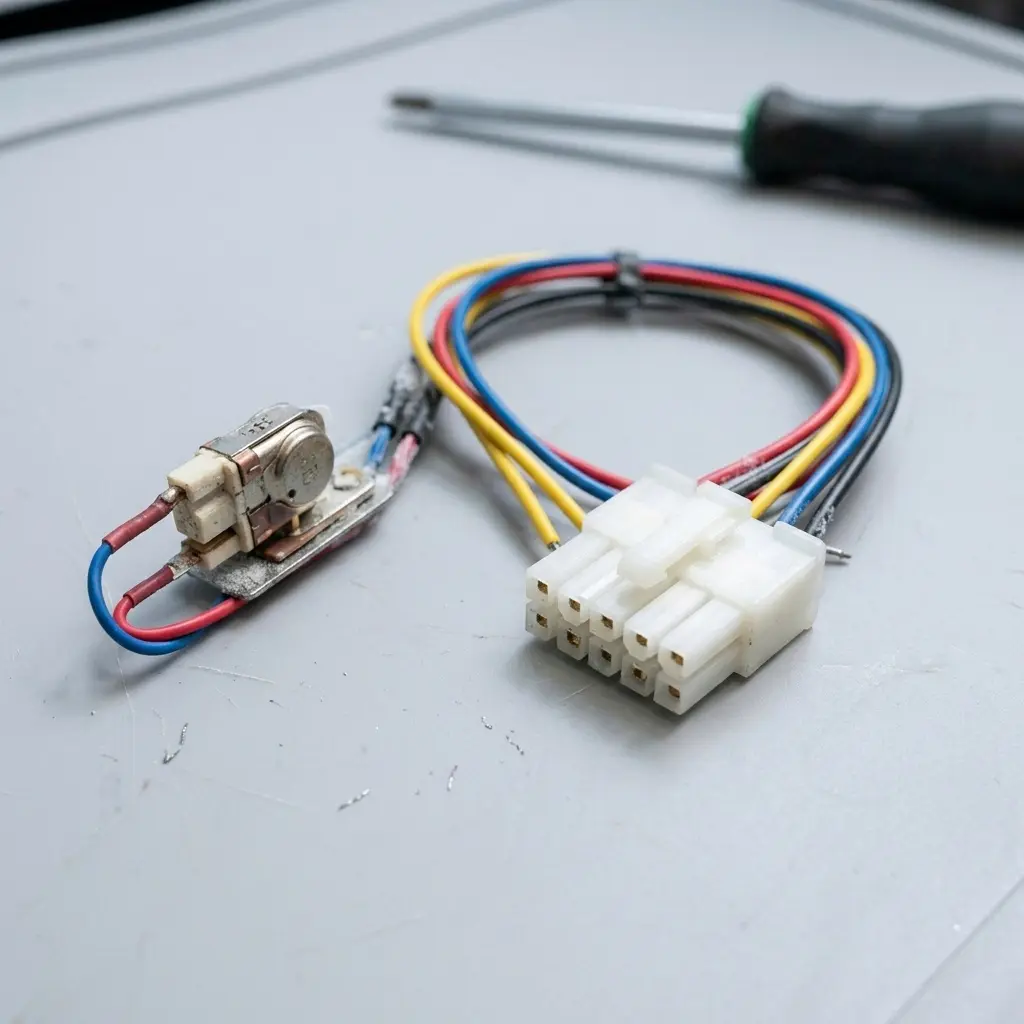
LG refrigerator freezer temperature sensor is the part typically referenced when either of these codes persists after ruling out door seal and airflow issues.
Defrost System Codes
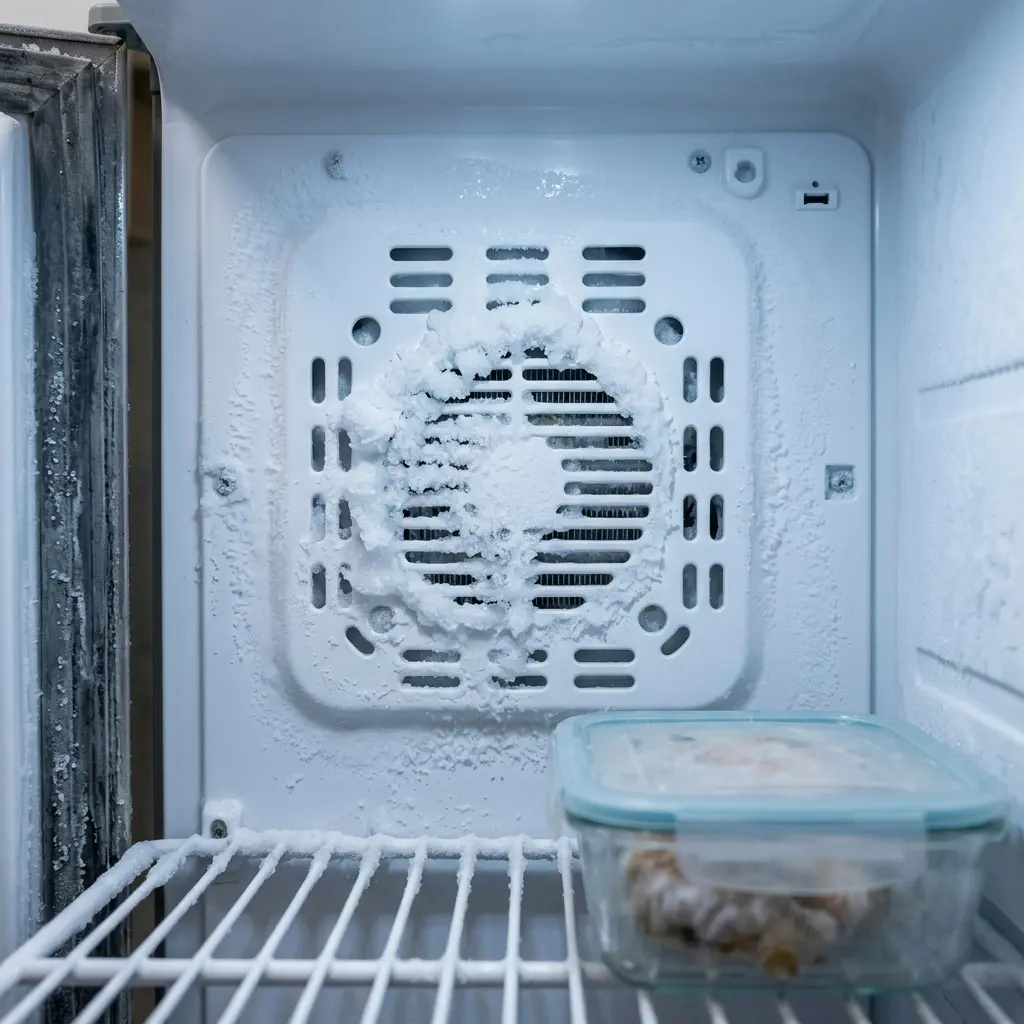
Er dS relates to the defrost sensor failing to report a valid reading during a scheduled defrost cycle. LG refrigerators run automatic defrost cycles on a timer, and this sensor confirms the evaporator coil temperature during that process. A quick technician-level tell: if this code appears alongside noticeably reduced cooling and audible ice buildup sounds from inside the freezer wall, the defrost system has likely been non-functional for multiple cycles already, not just the current one.
Er dh points to the defrost heater circuit specifically, separate from the sensor. This is a genuinely important distinction: dS is about measurement, and dh is about the heating element circuit itself failing to engage or draw the expected current during defrost.
👉 LG Refrigerator Excess Frost Buildup on Freezer Walls Only covers the physical symptom pattern that typically accompanies these two codes before the display even shows an error.
Compressor and Communication Codes
Er IF or Er CF codes (naming varies slightly by model generation) indicate a communication failure between the main control board and the inverter compressor’s control module. This is one of the more misunderstood codes on LG units because people assume it means the compressor itself has failed mechanically, when in a meaningful number of cases it’s actually a wiring harness connection issue or a firmware communication glitch between the two boards rather than the compressor motor itself being bad.
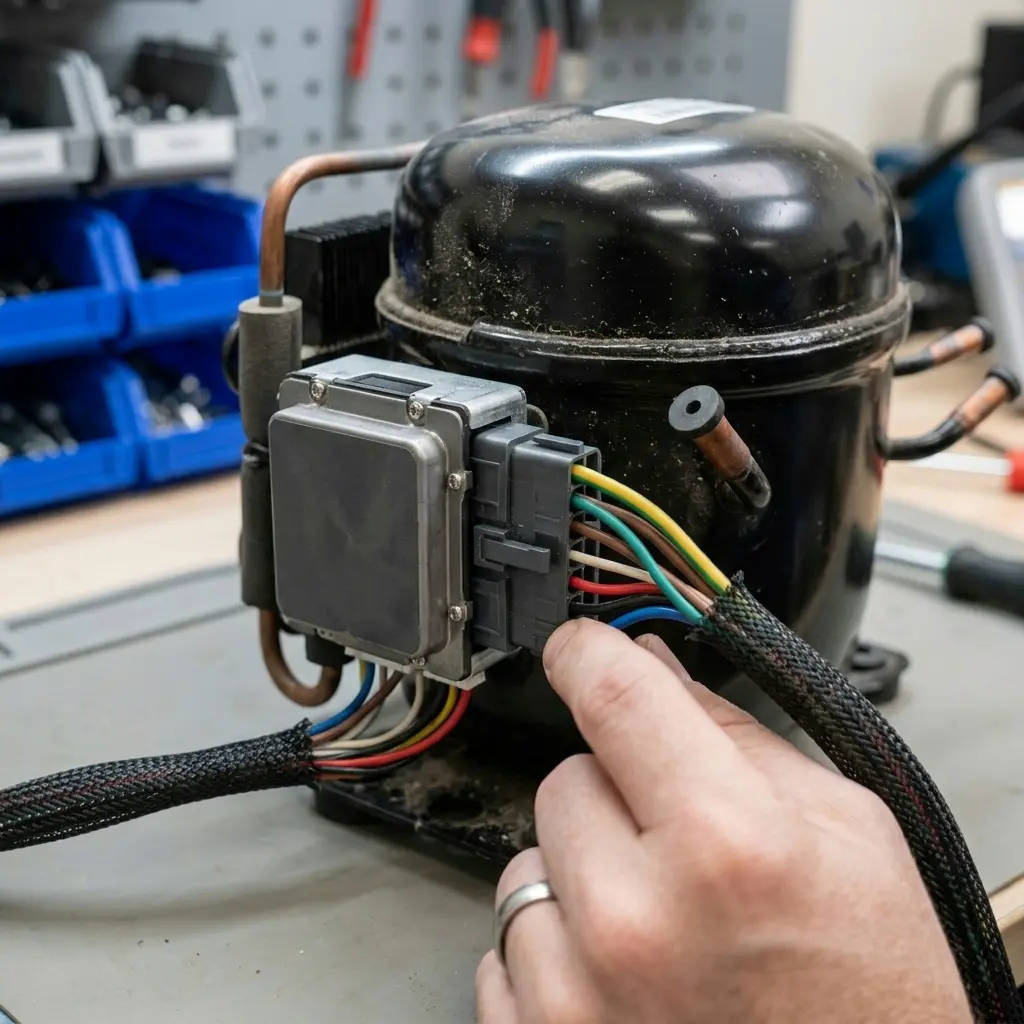
This is a genuinely useful piece of field knowledge: a technician seeing this code will typically check the connector at the compressor’s inverter module before assuming compressor replacement is needed because that connector sits in a location prone to loosening from vibration over years of normal operation, and reseating it resolves a surprising number of these calls without any parts being replaced at all.
The LG refrigerator inverter compressor wiring harness is the component most often implicated once a loose connection is ruled out as the cause and an actual wiring fault is confirmed.
Ice Maker and Water System Codes
IF (distinct from Er IF above, displayed differently on models with a dedicated ice maker panel) typically flags a mismatch between the ice maker module and the main control board, often appearing after a filter change or a power interruption during an active ice-making cycle.
Er 5y / 5ynS relates to a synchronization fault between dual ice makers on models equipped with both a standard freezer ice maker and a door-mounted dispenser ice maker, a configuration LG uses on several higher-end French door models. This code is specific to that dual-ice-maker architecture and won’t appear on single-ice-maker configurations at all.
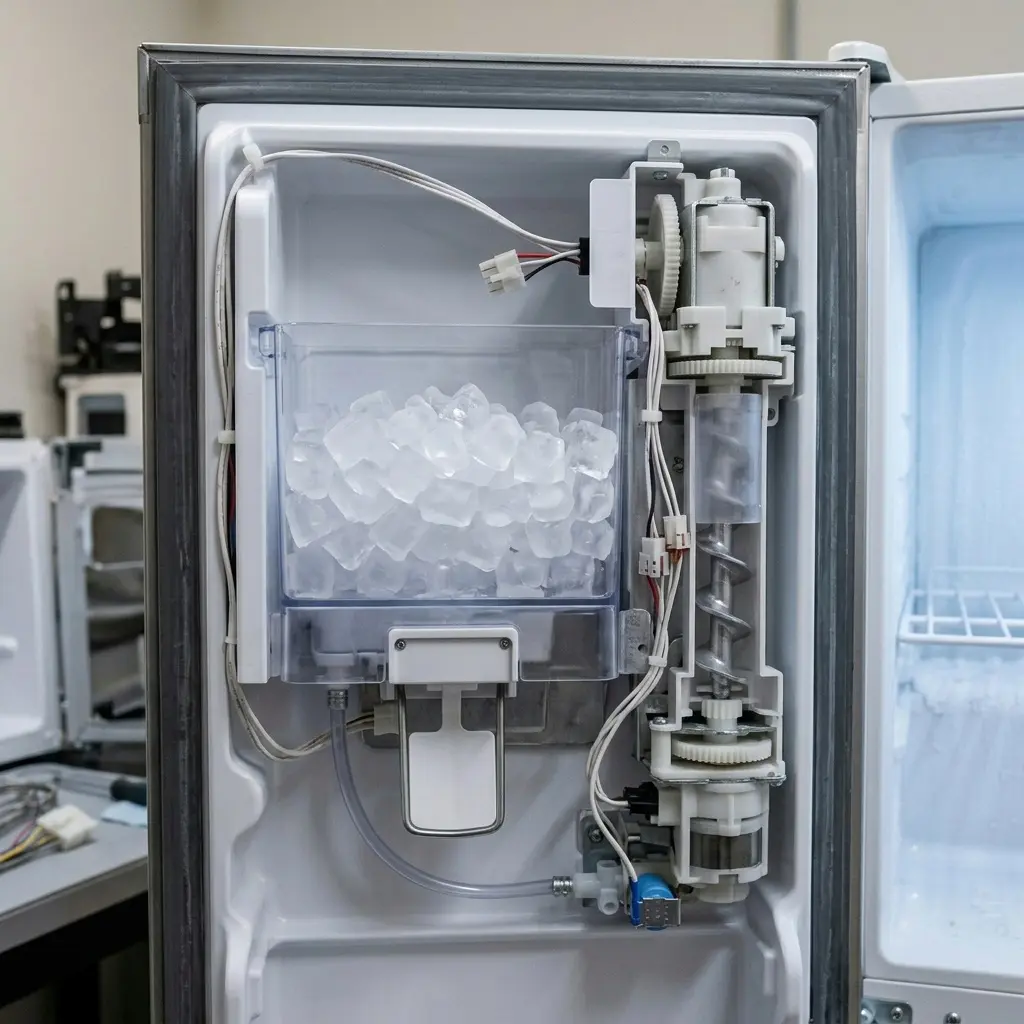
Here’s a quick reference table for the codes covered so far and their general fault category:
| Code | System Affected | Typical Trigger Category |
| Er FF | Freezer temperature sensor | Sensor reading out of range |
| Er rF | Fresh food temperature sensor | Sensor reading out of range |
| Er dS | Defrost sensor | Invalid reading during defrost cycle |
| Er dh | Defrost heater circuit | The heater fails to draw expected current |
| Er IF / CF | Compressor communication | Board-to-inverter signal loss |
| IF | Ice maker module | Sync/communication mismatch |
| Er 5y | Dual ice maker sync | Sync fault between two ice makers |
Door and Fan Codes
dr or a door-icon flash (rather than a lettered code on some newer display models) indicates a door switch reporting an open state longer than the threshold the board allows before flagging it, this is deliberately sensitive on LG units because prolonged door-open events are one of the most common causes of temperature-related cascading errors elsewhere in the system.
Er Fs points to the evaporator fan motor, either failing to reach expected RPM or reporting a stall condition. Insider detail worth knowing: this fan running audibly louder than normal for several days before the code appears is a common early warning sign that gets dismissed as “just noise” until the code eventually triggers, by which point the fan motor bearing wear has usually progressed further than if it had been checked when the noise first started.
Reading Code Severity: What Requires Immediate Action
Not every code demands the same urgency. Sensor-reading codes (FF, rF) that clear on their own after a door has been closed properly for a few hours generally indicate a transient event, not a failed part. Codes tied to active cooling failure, particularly Fs (fan) or dh (heater) combined with noticeably rising internal temperature, indicate the unit’s ability to maintain safe food temperatures is currently compromised, which is a different level of urgency than a code that flashes once and clears.
A question worth asking yourself before assuming the worst: has the code reappeared after a power cycle, or did it clear and stay clear? A code that returns immediately after resetting is telling you the fault condition is still active. A code that clears and doesn’t come back for days or weeks was very likely a one-off event triggered by something environmental, like a brief power flicker or an extended door opening during a big grocery haul.
FAQ
1. Do all LG refrigerator models use the same error codes?
No, code naming varies somewhat between model generations and whether the unit has a full digital display, an icon-based display, or no display at all, so the exact code shown for the same underlying fault can differ by model line.
2. Can I clear an error code just by unplugging the fridge?
A power cycle clears the displayed code, but if the underlying fault condition is still present, the code will typically reappear within a short time after power is restored, which is itself useful diagnostic information.
3. Does an error code always mean a part has failed?
No, a meaningful share of displayed codes trace back to loose connections, temporary sensor readings caused by door seal issues, or brief power interruptions rather than an outright failed component.
4. Why do I see a code but the fridge still seems to be cooling normally?
Some faults affect a secondary system, like ice maker synchronization, without impacting the main cooling function, so the unit can display a fault code while primary cooling continues operating normally.
5. Is it safe to keep using the refrigerator while a code is displayed?
It depends entirely on which code and whether internal temperature is holding steady; a sensor-reading code with stable temperatures is generally low-risk short-term, while a code tied to active cooling failure warrants closer monitoring of food safety.
6. Why does the same code sometimes appear and disappear repeatedly?
This pattern usually indicates an intermittent fault, most often a loose wiring connection or a sensor right at the edge of its acceptable reading threshold, rather than a fully failed component.
7. Do LG refrigerators log error history I can check later?
Many models retain a limited fault history accessible through a diagnostic mode combination on the control panel, which can be useful for spotting a recurring code pattern a technician would want to know about.
Final Word
An LG refrigerator error code is diagnostic information, not a verdict; it tells you which system flagged an issue and gives you a real starting point instead of guessing. Match the code to its category here and note whether it’s recurring or a one-off, and you’ll walk into any repair conversation already knowing more than most people who just call a technician the moment a light starts blinking.