
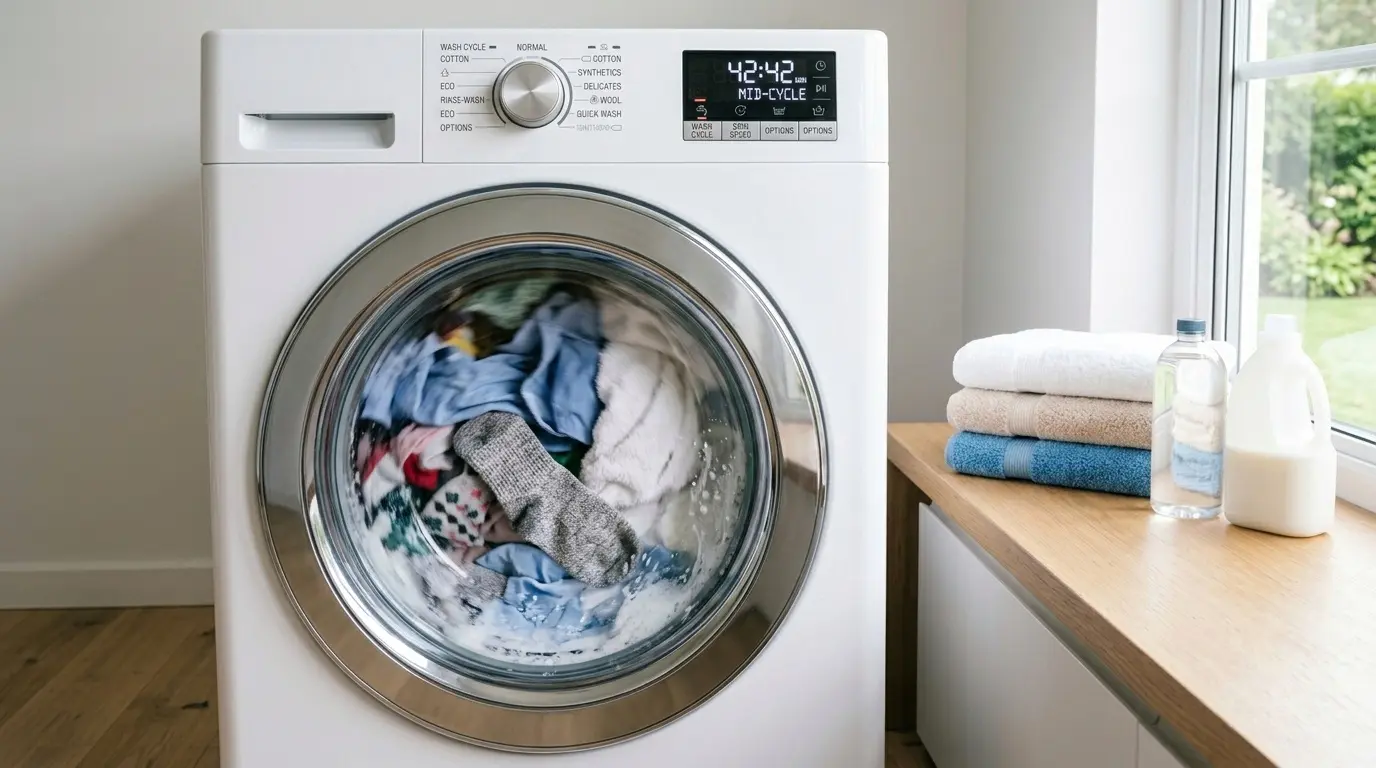
A customer once brought back a broken LG HE washer because it used a cup of water, whereas her old top-loader used five gallons; she was convinced the machine was malfunctioning. It wasn’t. It was doing exactly what an LG HE washer vs. a standard washer is designed to do, and that single misunderstanding is behind more return-desk arguments than any actual defect I’ve seen in fifteen years of walking customers through this exact comparison.
If you’re standing between an LG HE model and a traditional standard washer right now, the differences go a lot deeper than the spec sheet suggests, and getting this wrong costs you money for the next decade, not just at checkout.
Table of Contents
What HE Actually Means on an LG Machine
High efficiency isn’t a marketing badge LG slaps on premium units; it’s a specific engineering classification tied to how the machine manages water, detergent chemistry, and drum motion together as one system. A standard washer (the classic top-load agitator design LG still sells in a handful of budget lines) fills the tub most of the way with water and relies on a central post to physically thrash clothes against each other and the tub wall.
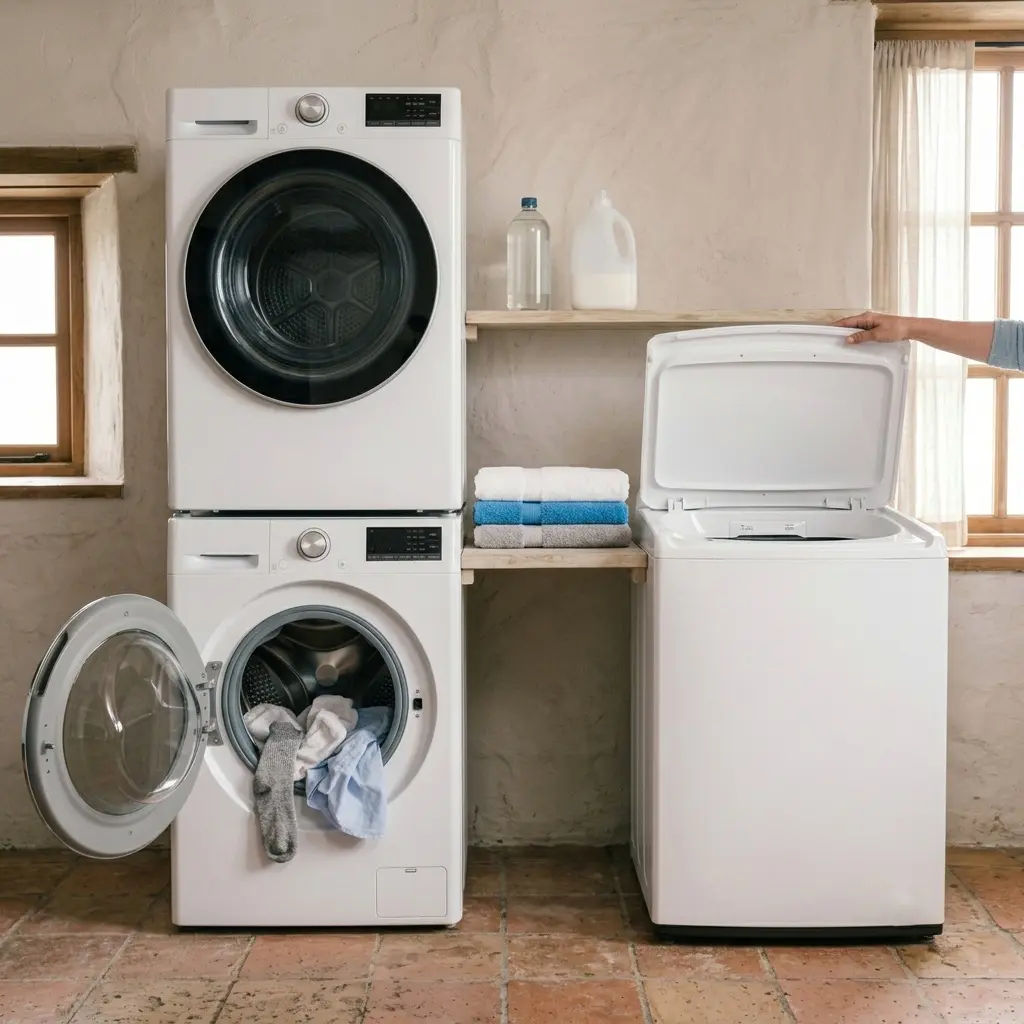
An LG HE washer, whether front-load or HE top-load without an agitator, uses far less water and instead relies on drum rotation, tumbling, and periodic soaking cycles to move detergent through the fabric. This is the root of almost every downstream difference on this page: cleaning method, water use, detergent needs, cycle length, and even how the machine sounds when it runs.
👉 [LG WM4000 series front load washer full review]
👉 [LG WM4000 vs LG WM3900: 7 Proven Differences Explained]
The practical takeaway most sales floors skip: HE isn’t automatically better for every household. It’s a different cleaning mechanism with different trade-offs, and matching it to your actual laundry habits matters more than the label on the box.
Drum Mechanics: Impeller vs Agitator
This is the single biggest physical difference between the two categories, and it’s worth understanding before anything else on this list makes sense.
Standard washers use a center-post agitator that twists back and forth, physically rubbing clothes against itself and against the drum. It’s aggressive, mechanically simple, and has barely changed in fifty years.
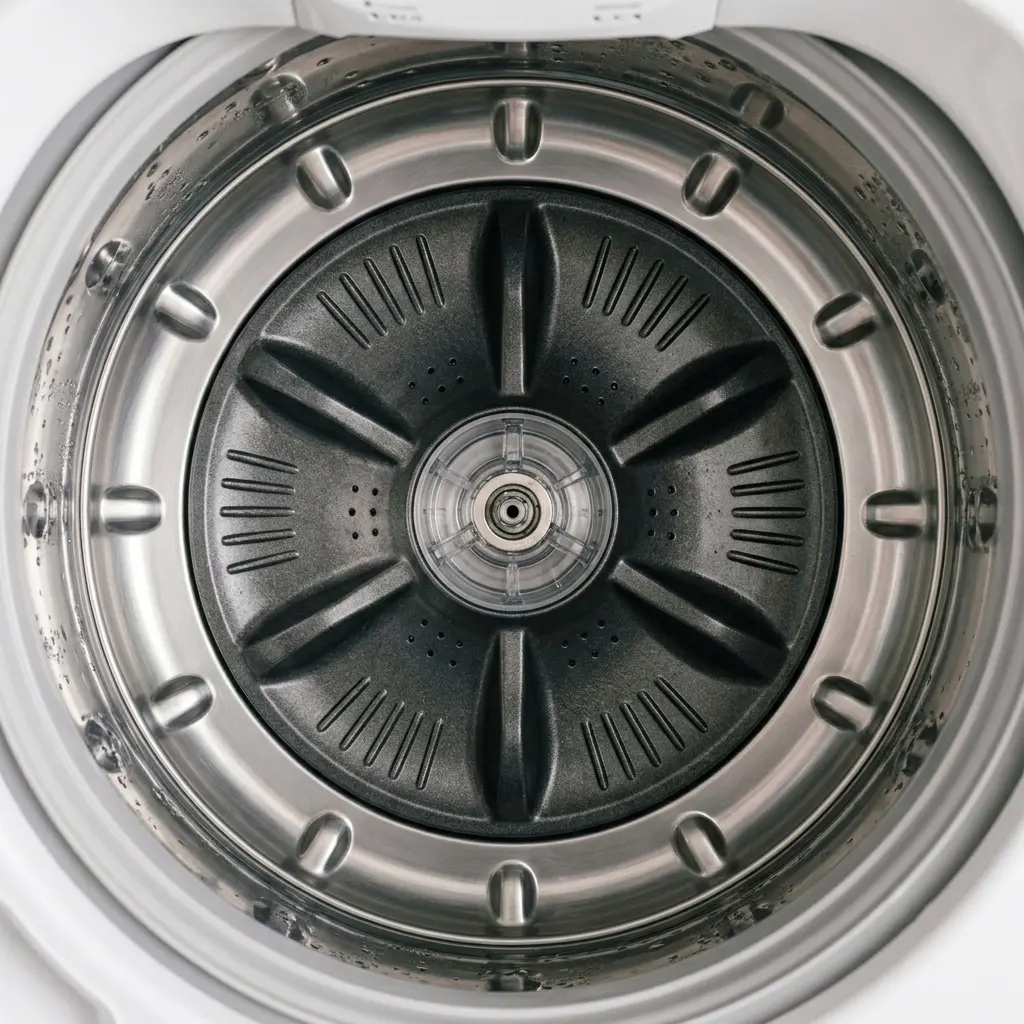
LG HE washers replace that post with either a low-profile impeller (on HE top-loaders) or drum tumbling powered by gravity (on front-loaders). Clothes are lifted and dropped through a shallow pool of water and detergent rather than churned against a fixed post.
| Feature | Standard (Agitator) | LG HE (Impeller/Front-Load) |
| Cleaning motion | Mechanical friction against center post | Tumbling / lifting-and-dropping through water |
| Fabric wear over time | Higher, visible pilling and thinning sooner | Lower, gentler on fibers |
| Tangling of large items | Common with sheets, hoodie strings | Reduced, but not eliminated, on bulky loads |
| Load capacity impact | The agitator post takes up drum space | No post, more usable capacity for same footprint |
💡 Personal Tip: That missing agitator post is why an LG HE top-load washer often lists a noticeably larger cubic-foot capacity than a standard machine with the same exterior dimensions. You’re not imagining it; the tub genuinely holds more because nothing is occupying the center.
Water Usage and Real-World Cleaning Performance
A standard top-loader typically uses somewhere in the range of 15-20+ gallons per full-size load, depending on water-level setting. An LG HE machine, front-load or HE top-load, typically runs in the 8-13 gallon range for a comparable load, sometimes less depending on soil level sensing.
Where people get confused is assuming less water automatically means less clean. In practice, HE machines compensate with longer soak times, more frequent drum rotation, and detergent formulated to work in a concentrated environment. For evenly soiled everyday laundry, most customers report equal or better cleaning after adjusting their detergent habits (more on that below).
Where standard agitator washers still legitimately win: extremely heavily soiled loads, think contractor work clothes caked in mud, or diapers that need serious mechanical agitation rather than a gentle tumble. If that’s the bulk of your laundry, don’t let an HE sales pitch talk you out of a standard machine.
👉 [how to remove heavy mud and grease stains from work clothes]
Wash Cycle Times: Why HE Takes Longer
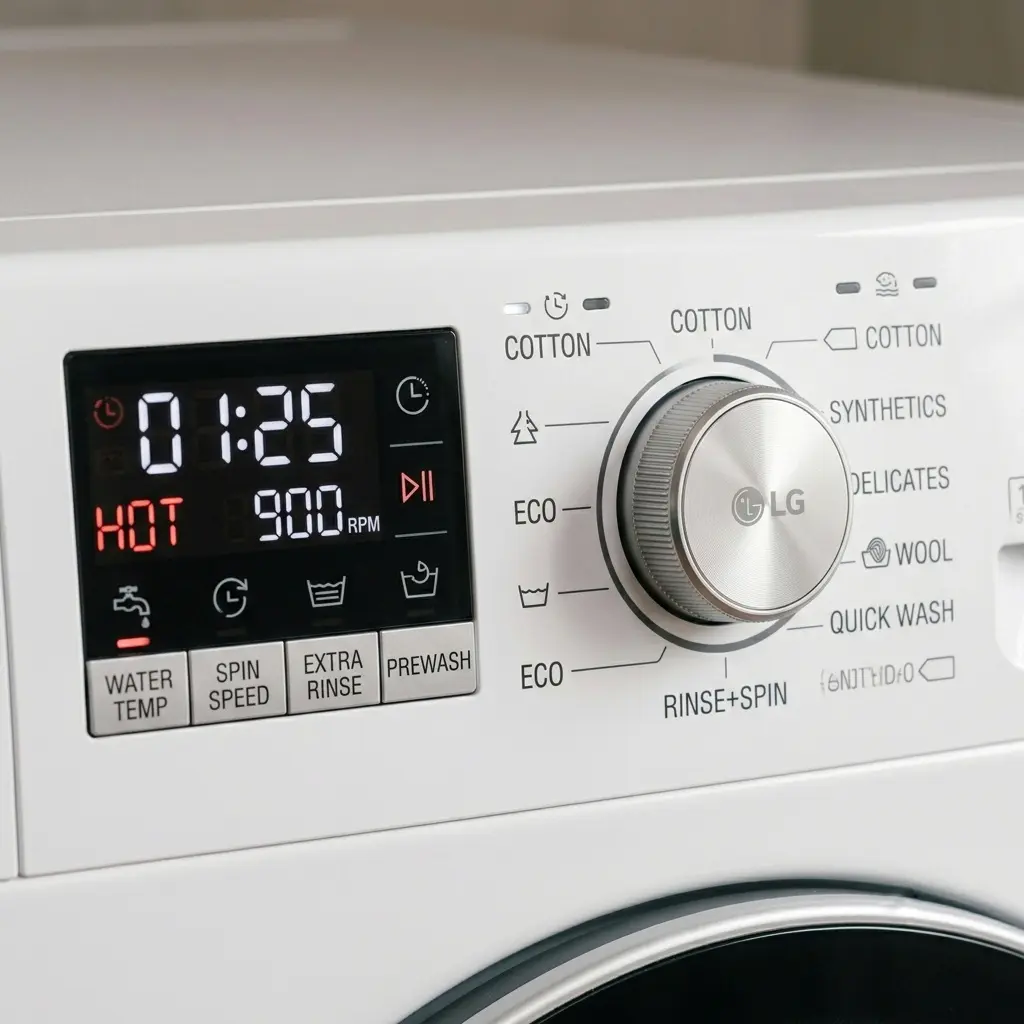
This is the complaint I hear most often after the sale, and it’s rarely mentioned upfront. A standard washer’s normal cycle often finishes in 30-45 minutes. An LG HE washer’s normal cycle frequently runs 55-75 minutes, and bulky or sanitary cycles on some models can push past 90 minutes.
That extra time isn’t a flaw; it’s the machine substituting time and drum motion for the water an agitator would have used instead. If you’re doing several loads back-to-back on laundry day, this difference compounds fast, and it’s a real lifestyle consideration that gets buried under spec-sheet talk about efficiency ratings.
A knowledgeable salesperson should always ask a customer this question before recommending an HE model: How many loads do you realistically run per week, and do you need to start-and-finish a load quickly, or is total efficiency more important than speed? Almost nobody asks it, and it’s the single biggest predictor of whether someone ends up happy with an HE purchase six months later.
Detergent Requirements and the HE Formula Problem
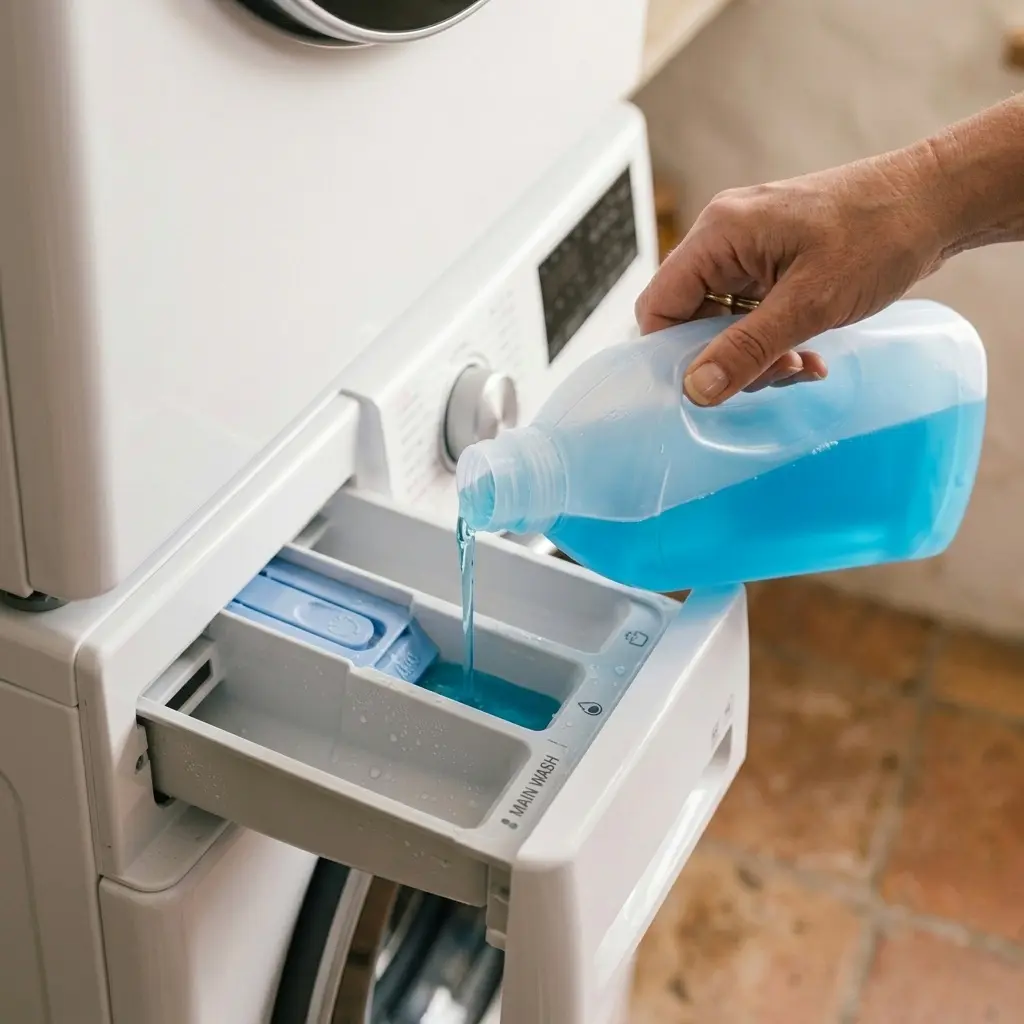
Every LG HE washer requires HE-labeled detergent; this isn’t optional or a mild recommendation. Regular detergent is formulated to work with the water volume a standard washer provides; it produces far more suds than an HE machine’s low-water environment can rinse away.
⚠️ Important: using regular detergent in an HE machine leaves residue buildup inside the drum and door gasket, which eventually causes musty odors and can trigger error codes related to excess suds or drainage. It looks like a mechanical failure. It’s almost always a detergent problem.
👉 [why LG washers show musty smell and how to fix it permanently]
Standard washers are far more forgiving here; they’ll run regular detergent without complaint because the higher water volume dilutes and rinses excess suds regardless of formulation.
Energy Consumption and the Real Cost Over Time
This is where the total cost of ownership conversation actually matters, and it’s the section most comparison articles gloss over in favor of a single sticker-price number.
| Cost Factor | Standard Washer | LG HE Washer |
| Water use per load | Higher | Lower |
| Detergent cost per load | Standard formula, moderate cost | HE formula required, often slightly pricier per load |
| Energy use per cycle | Higher (more water to move and sometimes heat) | Lower, a major factor in ENERGY STAR-type ratings |
| Typical cycle length | Shorter (less total energy per session despite less efficiency) | Longer (efficiency per gallon, but more total minutes running) |
| Long-term utility savings | Baseline | Meaningfully lower water and energy bills over years of use |
Over a five-to-seven-year ownership window, most households running several loads a week see the lower water and energy draw of an LG HE machine offset a meaningful portion of the higher upfront price, but this only holds if you’re actually using appropriate detergent and load sizes. Skip the HE detergent, overload the drum, or run mostly small loads on large-capacity settings, and a chunk of that theoretical savings disappears.
💡 Personal Tip: Hot water cycles are a hidden energy cost most spec sheets never mention. Because a standard washer fills with significantly more water per load, running a hot or warm cycle on it means your water heater does more work than for the same cycle on an LG HE washer, where less total water needs heating. If your household runs a lot of hot-water loads, towels, bedding, and cloth diapers, this gap widens further than the cold-wash numbers on the yellow EnergyGuide label suggest, since those labels use standardized cycles that don’t always reflect real household habits.
Load Capacity and Fabric Care Differences
Because HE machines don’t need agitator clearance, comparable exterior-size units often advertise larger usable capacity, frequently in the 4.5 to 5.5 cubic foot range for LG’s front-load and HE top-load lines, versus 3.5 to 4.5 cubic feet common on standard agitator models.
Fabric care is the other side of this. The gentler tumbling motion of HE machines is noticeably kinder to delicate fabrics, activewear with elastic, and anything prone to pilling. Standard agitator machines are harder on clothes over time; it’s a slow, cumulative effect that doesn’t show up in a showroom demo but becomes obvious in a wardrobe’s condition after a couple of years.
Noise, Vibration, and Installation Differences
Standard top-loaders are mechanically simpler and tend to be moderately loud but consistent throughout the cycle, with a steady mechanical thump. LG HE front-load washers, particularly during high-speed spin cycles (some reaching 1,300+ RPM), can be noticeably louder for shorter bursts and are far more sensitive to being perfectly level.
💡 Personal Tip: An unlevel HE front-load washer on an upper floor or older subfloor is one of the most common reasons customers report excessive vibration as a defect when it’s actually an installation issue. Standard top-loaders are far more forgiving of an imperfect floor because their agitation happens on a vertical axis rather than a horizontal spin.
👉 [LG Washer Upgrade Hacks: Noise Dampening & Efficiency Mods (2025 Guide)]
Maintenance, Common Failures, and Repair Costs
Standard agitator washers fail in fairly predictable, cheap-to-fix ways: worn agitator dogs, transmission issues, and lid switch failures. Parts are widely available and mechanically straightforward for a technician to access.
LG HE washers, especially front-load models, introduce components a standard washer simply doesn’t have: door boot seals, drain pumps prone to clogging with coins and debris, and more sensitive electronic control boards. After 1-2 years of real use, the most common HE-specific issues I see are door gasket mold/odor (tied directly to detergent misuse and skipped maintenance cycles) and drain pump clogs from small items passing through the lower-water wash cycle undissolved.
👉 [How to Clean LG Washing Machine: Front & Top Load 2026]
Neither category is inherently less reliable, but HE machines demand a maintenance routine (monthly tub-clean cycles, leaving the door cracked between loads, using the correct detergent amount) that standard washers simply don’t require to keep running well.
Parts availability is worth factoring in before you buy, not after something breaks. Standard agitator components have been mechanically similar across brands for decades, so third-party and aftermarket parts are usually easy to source even years after a model is discontinued.
LG’s HE-specific components, proprietary control boards, specific door boot assemblies, and model-specific drain pump housings are more likely to require OEM parts, which can mean longer wait times and higher repair costs once a machine is five-plus years old and the exact model has been phased out of production. This doesn’t make HE machines a bad long-term choice, but it’s a real factor in total cost of ownership that rarely comes up until the day you actually need the part.
Which One Actually Fits Your Household
- Large families doing 5+ loads a week, prioritizing speed over efficiency: a standard washer’s shorter cycles may fit real daily logistics better, even with the utility cost trade-off.
- Small households, apartment living, or anyone doing 2-4 loads a week: an LG HE washer’s water and energy savings compound meaningfully with less time pressure per load.
- Households with mostly heavily soiled workwear: standard agitator washers’ aggressive mechanical action still has a real edge here.
- Households prioritizing fabric longevity (activewear, delicates, higher-end clothing): LG HE machines are the clearly better long-term choice for the clothes themselves.
- Anyone on a well/septic system or paying metered water rates: the water savings on an LG HE washer are not a minor perk; they’re a genuine recurring cost reduction worth prioritizing.
Frequently Asked Questions
1. Can I use regular detergent in an LG HE washer if I run out of HE detergent?
It’s not recommended even for a single load. Regular detergent’s higher suds volume can overwhelm an HE machine’s low-water rinse cycle, sometimes triggering suds-related error codes and leaving residue in the drum and gasket that takes several tub-clean cycles to fully clear.
2. Is an LG HE washer actually cleaning as well as a standard washer, or just using less water?
For typical everyday soil levels, properly used HE machines clean comparably well because longer cycle times and concentrated detergent contact compensate for lower water volume. For heavily soiled loads, standard agitator washers still have a mechanical-force advantage.
3. Why does my LG HE washer take almost twice as long as my old top-loader?
This is expected behavior, not a malfunction. HE machines substitute time and drum rotation for the water volume an agitator would use, which is why normal cycles commonly run 55-75+ minutes compared to 30-45 minutes on a standard washer.
4. Do LG HE washers really save money long-term compared to standard washers?
Generally yes, on water and energy bills, assuming correct detergent use and reasonably full loads. The savings are real but gradual; they show up over years of ownership, not in the first few months.
5. Which is better for a family with young kids and heavily soiled laundry?
If the soil level is consistently heavy (grass stains, mud, diapers), a standard agitator washer’s more aggressive mechanical action may outperform an HE machine without extended cycles or pre-treating.
6. Do LG HE top-load washers still need the same maintenance as front-load models?
Yes, to a slightly lesser degree. HE top-loaders still require HE detergent and periodic tub-clean cycles, though they’re generally less prone to door-gasket mold issues since there’s no rubber door boot holding standing water.
7. Is it worth paying more upfront for an LG HE washer if I only do laundry twice a week?
For low-frequency households, the water and energy savings take longer to offset the higher purchase price, but the gentler fabric care and larger usable capacity per load are often worth it independent of the utility savings.
Final Verdict
Neither an LG HE washer nor a standard agitator washer is objectively superior; they’re built around genuinely different cleaning philosophies, and the right choice depends on your household’s actual laundry volume, soil levels, and how much you value fabric longevity versus cycle speed. If you’re doing frequent, moderately soiled loads and plan to keep the machine five-plus years, the LG HE side of this comparison earns its higher price tag. If speed and heavy-duty mechanical cleaning matter more than long-term utility savings, don’t feel pressured out of a standard machine just because it’s the older technology; it still does its job well for the right household.
Check current LG HE and standard model availability and pricing at your preferred retailer before deciding, since both lineups shift periodically.